THE LONG SHADOW OF WEAPONS
An educational essay on how weapons have shaped societies, how they are classified, who builds and trades them, and the ongoing effort to limit their harm
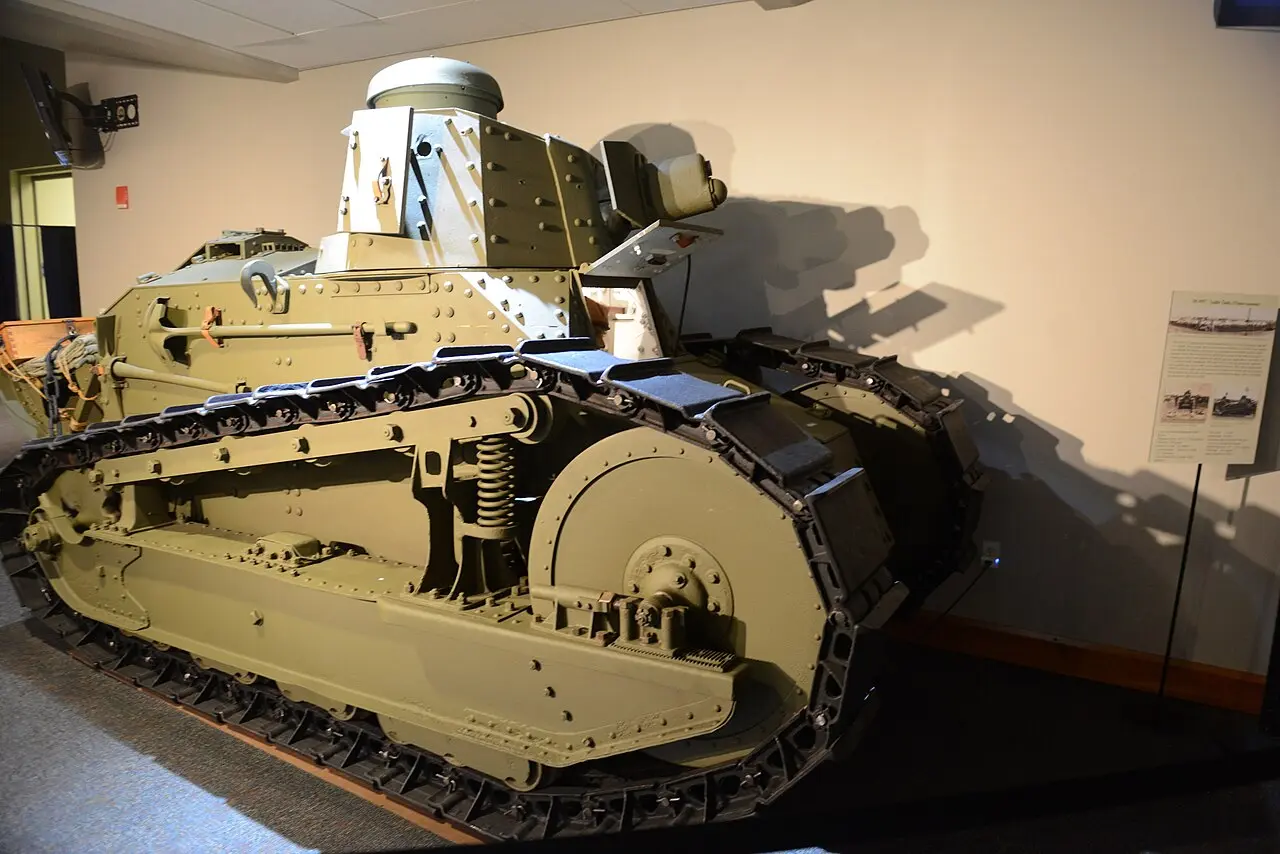
A note to the reader: This essay is written for understanding, not instruction. It contains no technical details on how any weapon is designed, made or used. Statistics are drawn from publicly available research, principally the work of the Stockholm International Peace Research Institute (SIPRI) and the Small Arms Survey. All photographs are public-domain historic or official images used solely for education.
1. When a Tool Becomes a Weapon
The word “weapon” is older than most of the objects we now apply it to. A stick, a stone, a length of metal — each can feed a family or end a life. The difference has always depended on the hand that holds it and the intention behind the action. That simple truth still sits beneath every modern argument about types of weapons, military spending, the arms trade and autonomous systems.
International organisations today speak of conventional weapons and weapons of mass destruction. They track small arms and light weapons separately from tanks, combat aircraft and missiles. They keep careful watch on nuclear, chemical and biological arsenals. Yet the deeper tension remains unchanged: how much destructive power a society is willing to organise, and how far it is prepared to go in limiting that power.
2. Five Thousand Years of Adaptation
The earliest edge
Long before cities existed, people shaped stone and wood into tools that could also serve as weapons. Archaeologists refuse to call every sharp flake a weapon; the evidence is rarely clear enough. What is certain is that the ability to strike at a distance — spear, throwing stick, bow — changed relations between groups. The same ingenuity that improved hunting also improved the ability to threaten rivals.
Metal, empire and the first arms races
Bronze and later iron changed the scale of organised violence. Durable blades, helmets and shields required mines, trade routes and specialised labour. States that controlled those resources gained advantages that lasted generations. The pattern that followed is almost monotonous: better protection invited better ways to overcome it; higher walls invited heavier engines. Defence and offence have chased each other across millennia.
Gunpowder and the industrial transformation
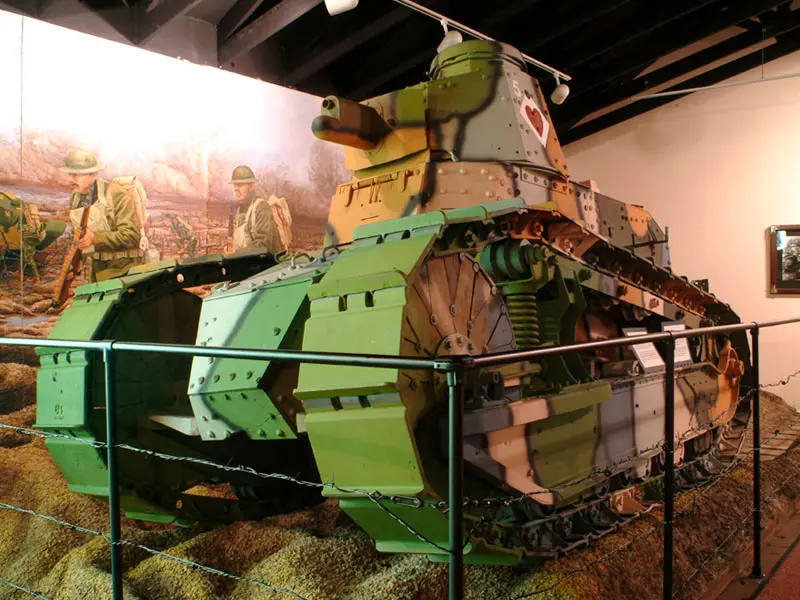
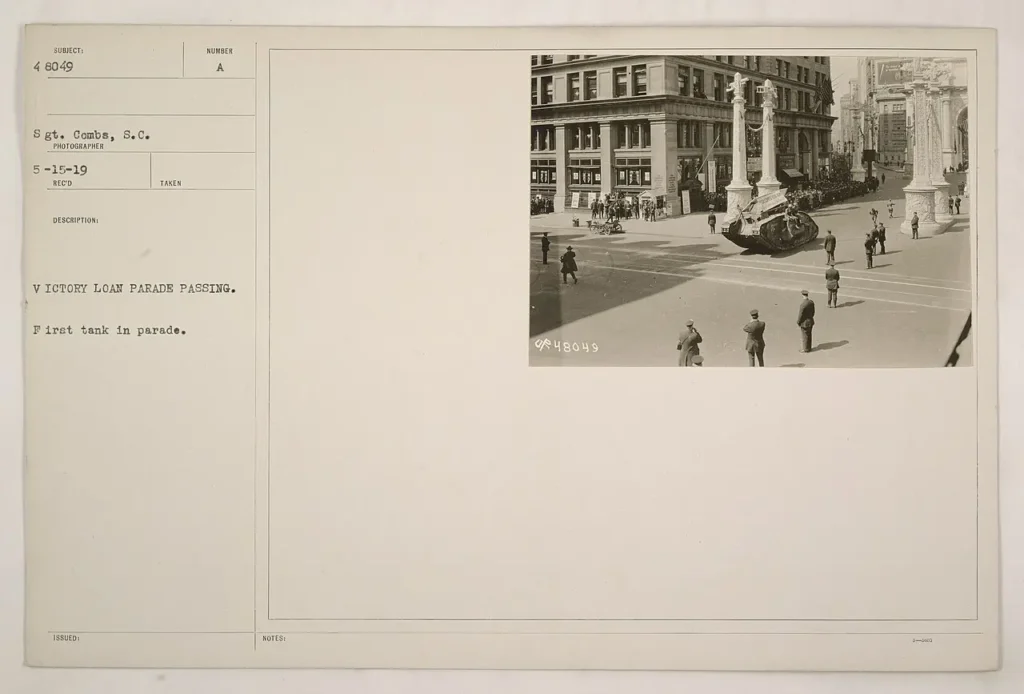
Gunpowder, first developed in China, eventually undid the medieval fortress. Cannons turned high stone walls from assets into liabilities. Firearms, once clumsy, gradually reduced the dominance of the armoured horseman. When industrial production arrived, the change became quantitative as well as qualitative. The two world wars of the twentieth century showed what mass manufacture and organisation could achieve when directed against human beings on a previously unimaginable scale.
The nuclear threshold and the digital present
August 1945 crossed a threshold that still defines international politics. The destruction of two cities demonstrated that a single weapon could erase the distinction between battlefield and home front. From that moment the largest arsenals existed mainly to prevent their own use. In the decades since, precision guidance, remote platforms, cyber capabilities and experiments with autonomy have added new layers of speed. The old questions of control, responsibility and human judgment have only grown sharper.
3. How We Classify the Instruments of Force
No map of weapons is perfect, yet a few broad categories keep discussion clear and useful:
Category | What it generally includes | Why it matters to the public |
Small arms & light weapons | Handguns, rifles, machine guns, portable launchers | Most often present in daily violence and prolonged civil conflict |
Heavy conventional systems | Artillery, tanks, combat aircraft, warships, most missiles | Core equipment of national armed forces and the formal arms trade |
Weapons of mass destruction | Nuclear, chemical and biological weapons | Effects that can escape any battlefield and any single generation |
Emerging & autonomous systems | Armed drones, cyber tools, AI-enabled targeting, hypersonic research | Decision speeds that challenge existing law and human oversight |
Less-lethal equipment | Riot-control agents, impact projectiles, conducted-energy devices | Police use — “less lethal” can still kill or permanently injure |
These labels are descriptive, not moral rankings. A single widely available firearm can destroy more lives than a complex system that never leaves storage.
4. The Price of Preparedness: Global Military Spending
According to the Stockholm International Peace Research Institute (SIPRI), world military expenditure has reached levels higher than at any previous point in the modern statistical record. Recent figures show spending approaching three trillion US dollars in a single year — roughly 2.5 percent of global economic output — and continuing a long period of real-terms growth.
A small number of states account for the large majority of this spending. The table below summarises the broad picture:
Indicator | Recent picture | What it suggests |
Global military spending | Nearly US$3 trillion in a recent year | Highest level in the modern record |
Share of world GDP | Approximately 2.5 % | Sustained political priority on military power |
Largest spender | United States (by a wide margin) | Continues to set the scale of global spending |
Other major spenders | China, Russia, major European & Asian states | Spending growth often strongest outside the United States |
Trend | Long period of real-terms growth | Reversal of earlier post-Cold War declines |
Large numbers can feel abstract. Behind them stand shipyards, design teams, training systems, research laboratories and political choices that repeatedly prefer certain forms of security over others. Money alone does not buy safety. It can deter, it can provoke, it can crowd out schools and hospitals, and it can lock societies into long industrial paths that prove hard to reverse.
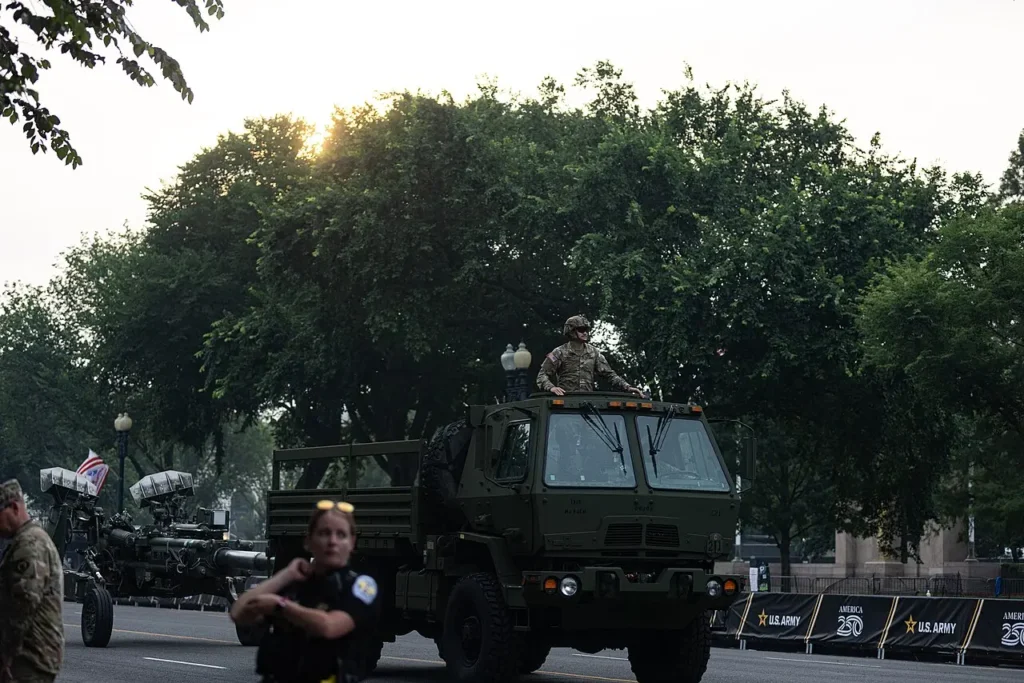
U.S. Army vehicles in ceremonial formation. Public-domain U.S. Army photograph. Conventional military display only.
5. The Global Arms Trade: Who Sells and Who Buys
The volume of major conventional arms transferred between states has risen in recent five-year periods to levels not seen since the end of the Cold War. The pattern of supply and demand is highly concentrated:
Rank / Role | Major exporters (recent periods) | Major importers (recent periods) |
1 | United States (≈40 %+ of global exports) | Ukraine (largest single recipient in recent data) |
2 | France | India |
3 | Russia | Saudi Arabia |
4 | Germany | Qatar |
5 | China | Pakistan |
Source: SIPRI arms-transfer data. Rankings shift with conflict and demand. Europe’s share of imports has risen sharply in recent periods.
Arms transfers are rarely pure commerce. They signal alliances, create dependencies and sometimes fuel conflicts that outlast the original crisis. The Arms Trade Treaty of 2014 tried to insert common standards and risk assessments into this traffic. Its effectiveness still depends on political will.
6. Nuclear Weapons: The Threshold That Still Defines Politics
Nine states currently possess nuclear weapons. The global inventory and its distribution remain highly concentrated:
Measure | Approximate figure | Note |
Total warheads (global) | ≈ 12,000 | SIPRI estimate |
In military stockpiles | ≈ 9,700+ | Available for potential use |
Deployed with forces | ≈ 4,000 | Operationally available |
Largest holders | Russia & United States | Together hold the large majority |
Trend in total inventory | Slow long-term decline | Driven by dismantlement of retired warheads |
Trend in usable warheads | Signs of increase | Modernisation continues in all nuclear-armed states |
The last major bilateral treaty limiting the strategic nuclear forces of the United States and Russia has expired. For the first time in more than half a century there is no treaty-bound numerical limit on those forces. Informal restraint has been discussed, yet the formal verification architecture that once provided a measure of predictability is no longer in force.
7. The Quiet Majority: Firearms in Civilian Hands
Most weapons on the planet are not missiles or tanks. They are firearms. The most widely cited global estimate, produced by the Small Arms Survey, counted just over one billion firearms, of which approximately 85 percent were in civilian hands. A single country — the United States — accounted for a very large share of the civilian total.
These figures are estimates and already several years old. Newer conflicts and continued manufacturing have almost certainly raised the global stock. What has not changed is the basic fact: the weapons that end the largest number of lives in most years are the ones that fit in a cupboard or under a bed.
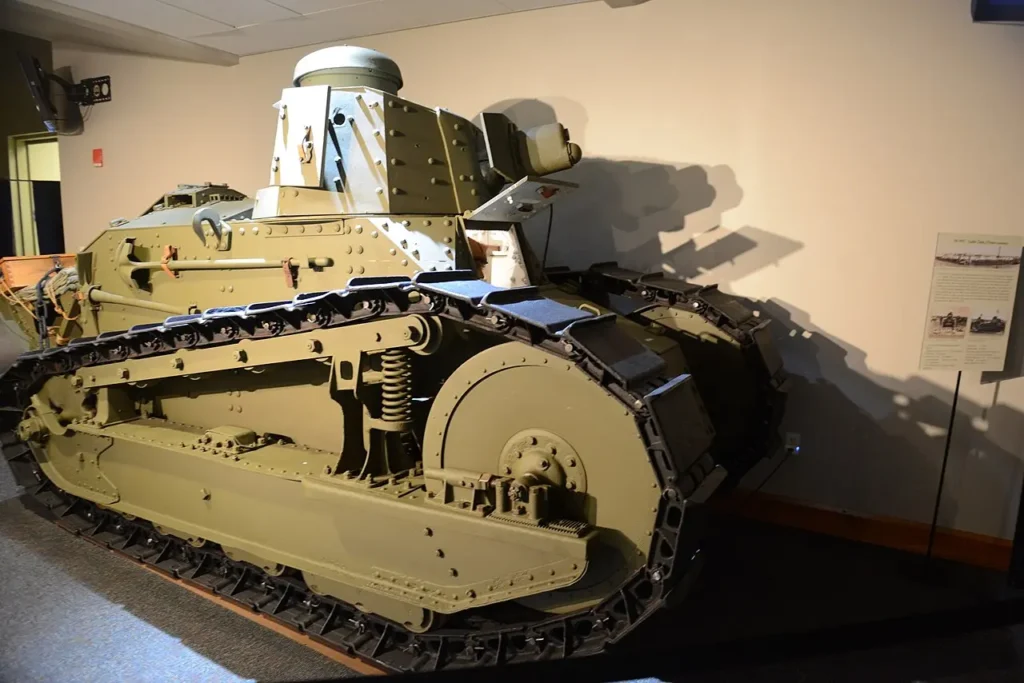
8. Machines That Decide: The Autonomy Debate
The newest anxiety is not simply more powerful weapons but systems that can select and engage targets with limited or no human intervention at the critical moment. Armed drones already operate near this boundary. Fully autonomous systems push further.
The United Nations and the International Committee of the Red Cross have warned that the world is approaching a moral and legal red line. A large majority of states have supported the opening of negotiations on rules for autonomous weapons. Discussions continue under existing conventional-weapons forums. No comprehensive binding treaty has yet been adopted.
The core question is whether the decision to take a human life can ever properly be delegated to a machine, and whether the principles of distinction, proportionality and accountability can survive that delegation. International humanitarian law was written for human judgment.
9. The Incomplete Architecture of Restraint
After every major advance in destructive power, societies have tried to invent limits. The list includes the Geneva Conventions, the Nuclear Non-Proliferation Treaty, the Chemical and Biological Weapons Conventions, the Arms Trade Treaty, the Mine Ban Treaty, the Convention on Cluster Munitions, and the Treaty on the Prohibition of Nuclear Weapons.
International humanitarian law does not abolish war. It tries to limit its worst effects — requiring parties to distinguish civilians from combatants, to avoid attacks expected to cause excessive civilian harm, and to refrain from weapons that are inherently indiscriminate or cause superfluous suffering. Treaties bind only those who join and comply. The disappearance of numerical limits on the largest nuclear arsenals is a reminder that even hard-won restraints can erode.
10. What Outlasts the Fighting
Statistics about budgets and stockpiles can make weapons seem abstract. They are not. Every armed conflict leaves people who cannot return home, children who grow up among unexploded ordnance, farmers who cannot plough their fields, and survivors who carry injuries for decades. Landmines and cluster-munition remnants continue to kill long after armies withdraw.
Small arms and light weapons, because they are numerous and durable, sustain cycles of violence that formal peace agreements sometimes fail to end. The slower work of clearance, risk education, survivor assistance and institutional rebuilding receives less attention than the production of new systems — yet it largely determines whether a society can recover.
11. Patterns Worth Remembering
- Global military spending has reached historic highs, yet the rate of increase is not uniform from year to year or region to region.
- Europe’s share of global arms imports has risen sharply in recent five-year periods.
- The total number of nuclear warheads continues a slow long-term decline while the number available for use has shown signs of increase.
- Most of the world’s firearms are held by civilians, not by armed forces.
- Every major leap in weapon technology has been followed by an attempt — partial and contested — to place legal or political limits on its use.
Frequently Asked Questions
What are the main types of weapons?
The main public categories are small arms and light weapons, heavy conventional systems (tanks, aircraft, ships, artillery, missiles), weapons of mass destruction (nuclear, chemical, biological), emerging and autonomous systems, and less-lethal equipment used by police.
How much does the world spend on weapons and militaries?
Recent SIPRI estimates place global military spending at nearly three trillion US dollars in a single year — a record level equal to about 2.5 percent of world GDP.
Which country is the largest arms exporter?
The United States has consistently supplied the largest share of international major-arms transfers in recent five-year periods, often around 40 percent or more of the global total.
Which country is the largest arms importer?
Import rankings shift with conflict and demand. In recent periods Ukraine, India, Saudi Arabia, Qatar and Pakistan have ranked among the largest recipients.
How many nuclear weapons exist?
SIPRI estimates a global inventory of roughly twelve thousand warheads, of which the large majority of those available for use are held by Russia and the United States.
What happened to the last major bilateral nuclear treaty?
The New START treaty between the United States and Russia has expired, ending the last treaty-bound numerical limits on their strategic nuclear forces.
How many guns are there in the world?
The most widely cited global estimate counted just over one billion firearms, with approximately 85 percent in civilian hands. The figure should be treated as an estimate.
What are lethal autonomous weapons?
Systems that can select and attack targets with limited or no human intervention in those critical functions. International talks focus on retaining meaningful human control.
What is the Arms Trade Treaty?
A 2014 treaty that sets common standards for the international trade in conventional arms and requires states parties to assess certain risks before authorising exports.
What the Numbers Cannot Capture
Weapons are mirrors. They reflect our fears, our ingenuity, our capacity for organised violence, and our persistent desire to place limits on that violence. Record military spending, a strong arms trade, growing usable nuclear stockpiles, the erosion of treaty limits, and a deepening debate about machines that can kill without a human hand on the trigger are not abstract. They describe choices being made now.
Understanding those choices does not require technical mastery of any particular system. It requires attention to history, to the human consequences that outlast every ceasefire, and to the incomplete legal instruments we have built in the hope of restraining ourselves. That attention is the least we owe the future.
Principal Sources
- Stockholm International Peace Research Institute (SIPRI) — military expenditure and arms-transfer data, nuclear forces assessments
- Small Arms Survey — global estimates of civilian and other firearms holdings
- United Nations Office for Disarmament Affairs
- International Committee of the Red Cross — materials on conventional weapons and international humanitarian law
- Official statements and treaty texts concerning New START and other arms-control agreements
This essay is for public education and historical understanding only. It contains no instructions for the design, manufacture, modification or use of any weapon. All figures are estimates published by the named organisations and remain subject to revision. The photographs are public-domain works used solely for educational illustration and are credited in their captions