MARITIME GUIDE · UPDATED NOVEMBER 2026
Ships: What They Are, Types, Parts and How They Work
A ship is a large vessel built to travel across oceans, seas or large lakes, carrying cargo, passengers or equipment for special jobs such as fishing, research or defence. Ships carry more than 80% of the world’s traded goods, from crude oil and grain to the phone in your pocket.
This guide covers what makes a vessel a ship, the main types of ships, the parts of a ship, how ships float and move, how they are measured, and the biggest ships in the world today.
80%+
of world merchandise trade travels by sea
112,500
merchant ships in the world fleet (2025)
24,346 TEU
capacity of the largest container ship
7,600
passengers on the largest cruise ships
What Is a Ship?
A ship is an ocean-going or large inland watercraft with the size, strength and range to sail long distances on open water. It has a professional crew, usually several decks, and is designed for a specific job.
Every ship, from a fishing trawler to an aircraft carrier, shares four basics:
Ships do three broad jobs. Merchant ships (cargo ships) carry goods for trade. Passenger ships carry people. Special purpose ships, including fishing vessels, research vessels, icebreakers and naval ships, do a task rather than carry trade cargo.
Ship vs boat: what's the difference?
There is no single legal line between a ship and a boat. The difference comes down to size, range and purpose.
| Ship | Boat | |
|---|---|---|
| Size | Large, often hundreds of metres long | Small to medium |
| Where it works | Open sea, ocean crossings, large lakes | Rivers, lakes, coastal waters |
| Crew | Professional crew with officers | Often one person or a small crew |
| Decks | Usually several | Usually one or none |
| Example | Container ship, cruise ship, destroyer | Rowing boat, speedboat, lifeboat |
Sailors have a simple rule of thumb: a ship can carry a boat (such as a lifeboat), but a boat cannot carry a ship. Submarines are the famous exception, since navies call them “boats” whatever their size.
Why Ships Matter to the World
Shipping is the backbone of global trade. More than 80% of the world’s merchandise trade by volume travels by sea, according to UNCTAD’s Review of Maritime Transport 2025, and for many developing countries the share is even higher.
The world merchant fleet is huge. On 1 January 2025 it numbered about 112,500 ships with a combined capacity of 2.44 billion deadweight tons. Ships are also the cheapest way to move heavy goods over long distances: one large container ship can carry what would take thousands of trucks.
Maritime trade depends on a few narrow sea passages, known as chokepoints:
- Suez Canal: the shortcut between Europe and Asia
- Panama Canal: linking the Atlantic and Pacific
- Strait of Hormuz: around 11% of world maritime trade and more than a third of seaborne oil
- Strait of Malacca: the main route between the Indian Ocean and East Asia
When one is blocked, the effect is felt around the world. In 2021 the container ship Ever Given ran aground in the Suez Canal and held up hundreds of ships for about a week.
The 7 Main Types of Ships
Ships are grouped by what they carry or the job they do. The seven main types of ships are:
| Type of ship | What it carries or does | Example |
|---|---|---|
| 1. Container ship | Manufactured goods in standard steel containers | MSC Irina (about 24,346 TEU) |
| 2. Bulk carrier | Loose dry cargo: iron ore, coal, grain, cement | Valemax ore carriers |
| 3. Tanker | Liquids and gases: crude oil, fuels, chemicals, LNG | Very Large Crude Carriers (VLCCs) |
| 4. Passenger ship | People: cruise ships, ferries, ocean liners | Icon of the Seas |
| 5. Fishing vessel | Catches and often processes fish | Factory trawlers |
| 6. Special purpose / offshore vessel | Tugs, icebreakers, research, cable-laying, offshore support | Prelude FLNG |
| 7. Naval ship | Defence and patrol | Gerald R. Ford-class aircraft carrier |
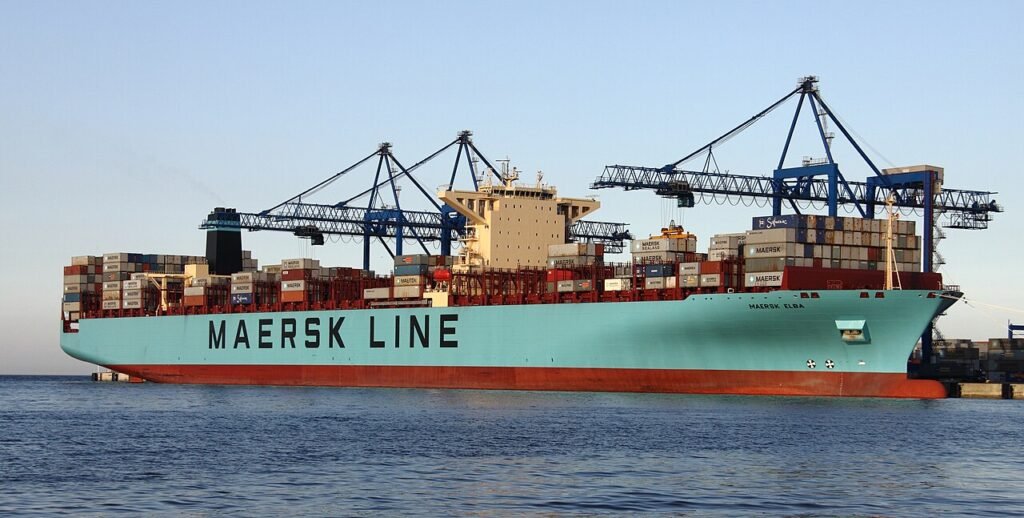
1. Container ships
Container ships carry goods packed in standard steel boxes: clothes, electronics, furniture, car parts, food and almost everything sold in shops. Their capacity is measured in TEU (twenty-foot equivalent units), the space taken by one 20-foot container.
Because every container has the same size, giant cranes at ports can load and unload thousands of them a day and pass them straight onto trucks and trains. This system, called containerisation, made global trade fast and cheap.
The largest container ships now carry about 24,000 TEU. MSC Irina leads at roughly 24,346 TEU. In 2026, CMA CGM took delivery of the LNG-powered CMA CGM Notre Dame: 400 metres long and rated at 24,212 TEU. The global container fleet passed about 34 million TEU in September 2026, according to BIMCO.
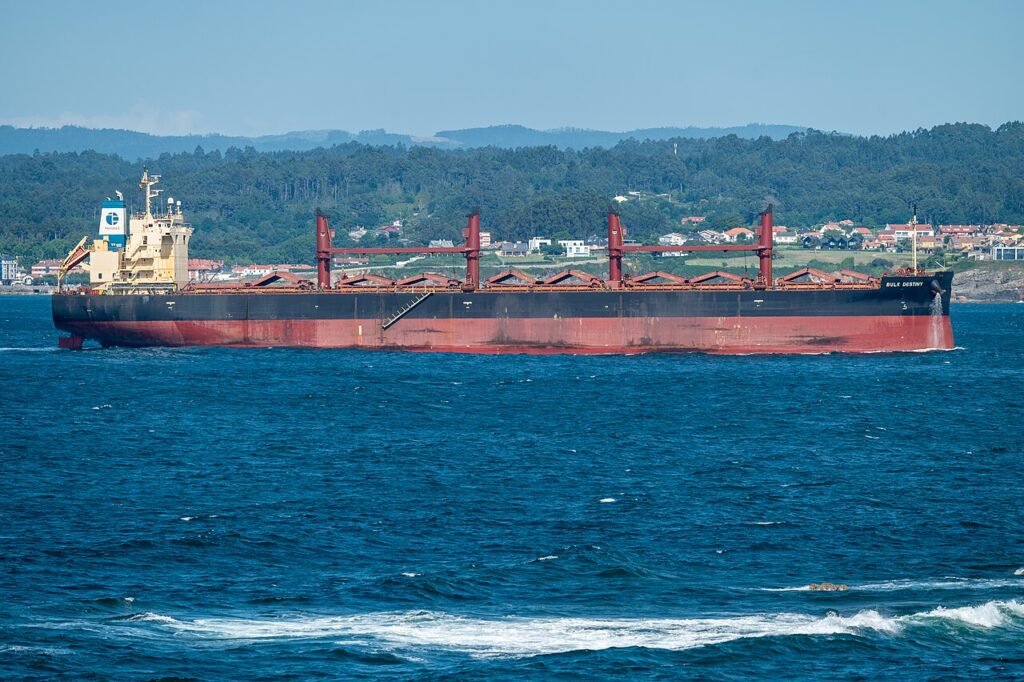
2. Bulk carriers
Bulk carriers move unpackaged dry cargo such as iron ore, coal, grain, bauxite, fertiliser and cement. Their decks have large hatch covers that open onto deep cargo holds, so cargo can be poured in by conveyor and lifted out with grabs.
Bulk carriers come in standard size classes, from small Handysize ships that reach shallow ports to giant Valemax ore carriers of about 400,000 deadweight tons.

3. Tankers (oil, chemical and gas carriers)
Tankers carry liquids and gases in bulk:
- Oil tankers move crude oil and refined products like petrol, diesel and jet fuel. The biggest, Very Large Crude Carriers (VLCCs), carry about 2 million barrels each.
- Chemical tankers carry acids, vegetable oils and industrial liquids in coated or stainless-steel tanks.
- Gas carriers move liquefied natural gas (LNG) at about −162°C, or liquefied petroleum gas (LPG), in insulated tanks.
Under the MARPOL convention, oil tankers must have a double hull: a second inner skin that reduces the chance of a spill after a collision or grounding.
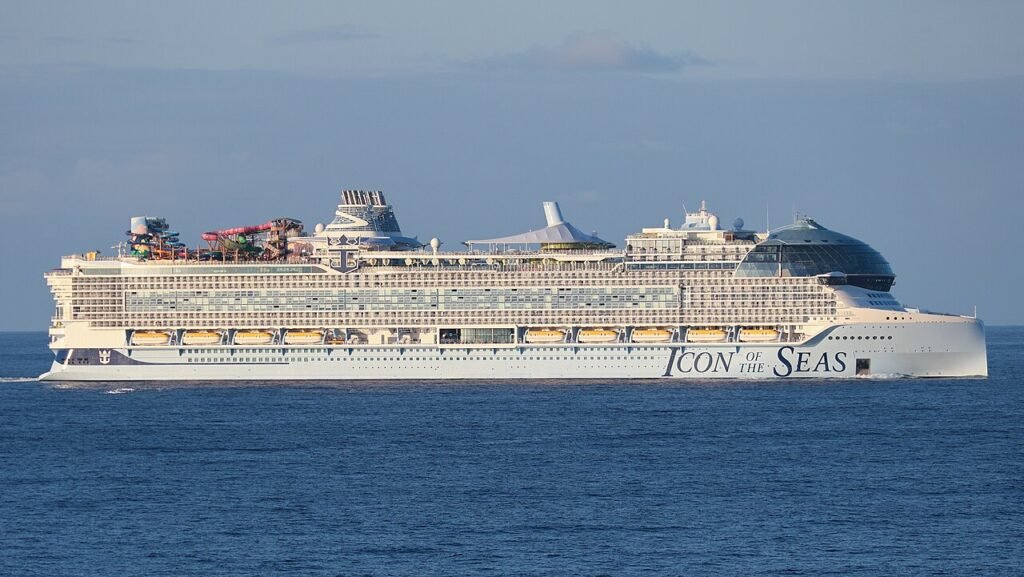
4. Passenger ships: cruise ships and ferries
Passenger ships carry people:
- Cruise ships are floating resorts that sail between ports for holidays, with restaurants, theatres, pools, spas and water parks on board.
- Ferries carry passengers on short, scheduled routes. Many are ro-ro (roll-on/roll-off) ships that also carry cars and trucks.
- Ocean liners are built for long, fast crossings in rough water. Only a few, such as Cunard’s Queen Mary 2, still sail.
Cruise ships are now among the largest ships ever built. Royal Caribbean’s Icon class (Icon of the Seas, Star of the Seas and Legend of the Seas) measure about 248,663 gross tons, and Icon of the Seas can carry up to 7,600 passengers.

5. Fishing vessels
Fishing vessels range from small coastal boats to large factory trawlers that catch, clean, freeze and pack fish at sea for weeks at a time. The main kinds are:
- Trawlers, which tow large nets through the water or along the seabed
- Longliners, which set long lines with thousands of baited hooks
- Purse seiners, which circle schools of fish such as tuna with a net
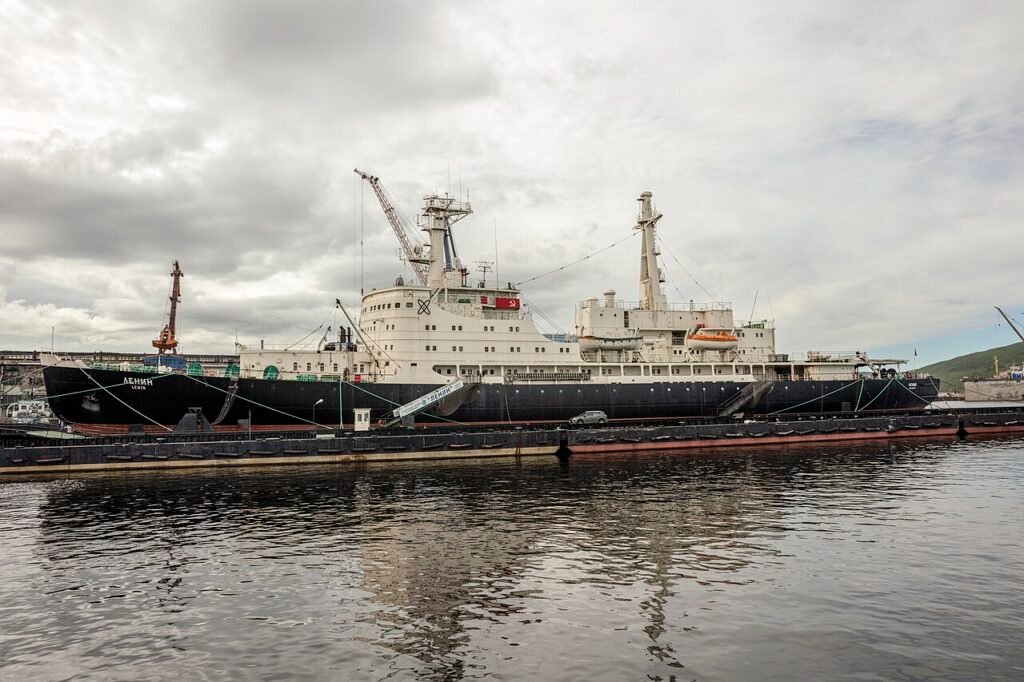
6. Special purpose and offshore vessels
Special purpose vessels do a job instead of carrying trade cargo. Common examples:
- Tugboats push and pull large ships in and out of port.
- Icebreakers clear routes through frozen polar seas.
- Research vessels study the ocean, seabed, weather and marine life.
- Cable-laying ships lay internet and power cables on the seabed.
- Dredgers deepen harbours and channels.
- Offshore supply ships serve oil and gas platforms and offshore wind farms.
One of the largest floating structures ever built, the 488-metre Prelude FLNG, produces and stores liquefied gas at sea.

7. Naval ships
Naval ships, or warships, are built for defence and security. The main kinds are aircraft carriers, cruisers, destroyers, frigates, corvettes, amphibious assault ships, patrol vessels and submarines.
The largest warships in service are the US Navy’s Gerald R. Ford-class aircraft carriers, at about 100,000 tons displacement, carrying more than 75 aircraft.
Sailing Ships and Tall Ships
A sailing ship is driven wholly or mainly by the wind in its sails. Large traditional sailing ships are often called tall ships, and today many sail as training ships, museum ships or for adventure cruises.
Sails come in two basic shapes:
- Square sails hang from horizontal spars called yards and sit across the ship.
- Fore-and-aft sails run along the ship’s centre line, like the sail of a modern yacht.
Sailing ships are classified by their rig: how many masts they have and which kind of sail each mast carries. The four best-known types of sailing ships are:
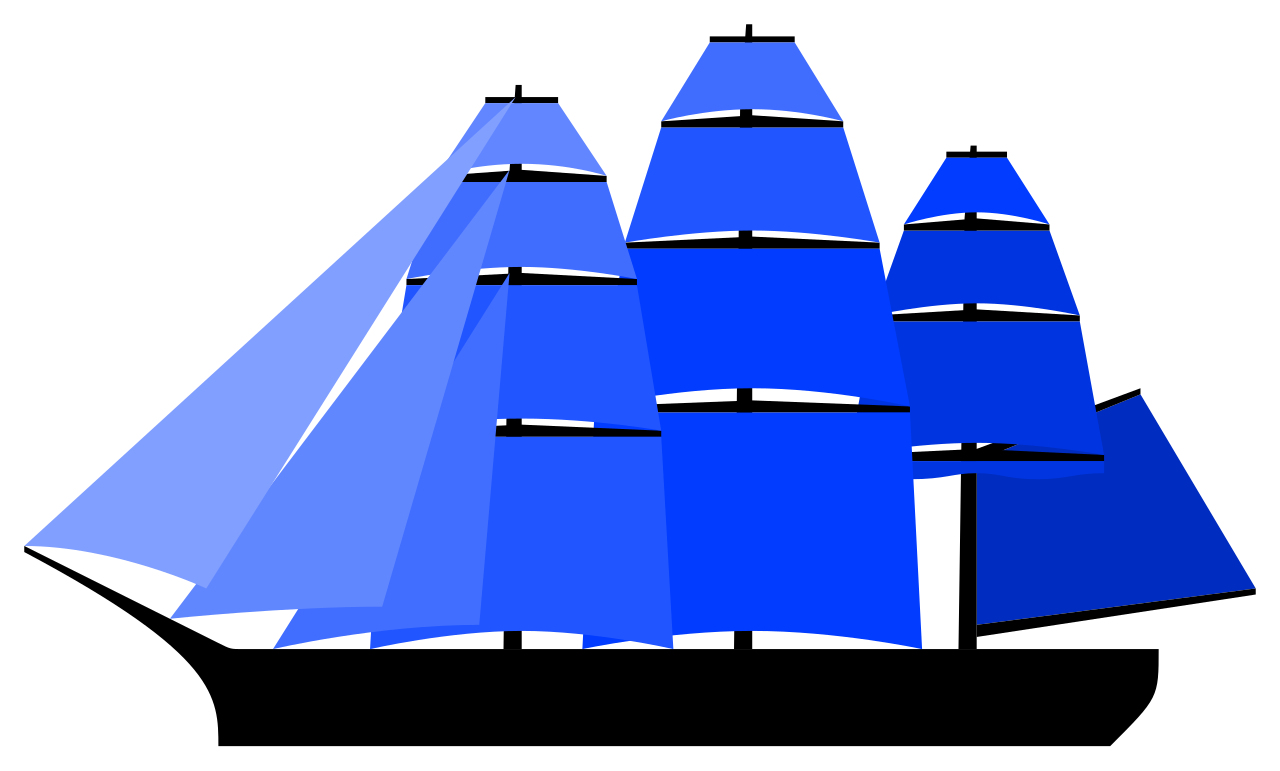
3 TO 5 MASTS
Full-rigged ship
Rig: Square sails on every mast.
Known for: Fast tea clippers such as the Cutty Sark; the five-masted Preussen.

3 OR MORE MASTS
Barque (bark)
Rig: Square sails on all masts except the last, which carries fore-and-aft sails.
Known for: Needs a smaller crew than a full-rigged ship.

2 MASTS
Brig
Rig: Square sails on both masts, plus a gaff sail on the main mast.
Known for: Used as merchant and training ships.

2 OR MORE MASTS
Schooner
Rig: Mainly fore-and-aft sails; the tallest mast is at the back.
Known for: Fast and easy to handle; used as couriers and warships.
Parts of a Ship
Every ship is built from the same core parts, whatever its size or job.
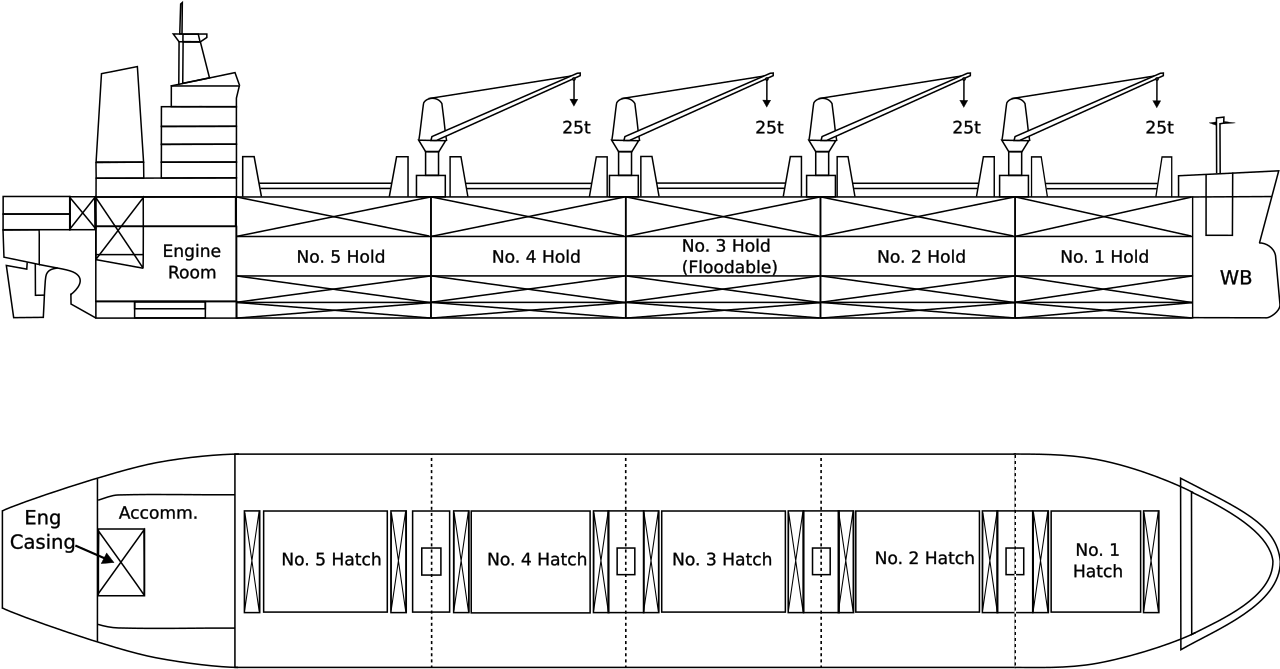
| Part | What it is | What it does |
|---|---|---|
| Hull | The watertight body of the ship, usually welded steel | Keeps the ship afloat and holds everything inside |
| Bow | The front of the ship | Cuts through the water; a bulbous bow below the waterline reduces wave resistance |
| Stern | The back of the ship | Holds the propeller and rudder |
| Keel | The backbone along the bottom of the hull | Gives the hull strength and helps stability |
| Deck | The floors of the ship | The main deck is the top continuous deck |
| Superstructure | The structure built above the main deck | Holds crew quarters, offices and the bridge |
| Bridge | The command centre | Where officers navigate, steer and communicate |
| Engine room | Below decks, usually near the stern | Houses the main engines and generators |
| Propeller | A set of curved blades at the stern | Pushes the ship forward |
| Rudder | A flat plate behind the propeller | Turns the ship |
| Cargo holds and tanks | Spaces inside the hull | Carry cargo, fuel and fresh water |
| Ballast tanks | Tanks low in the hull | Take in or pump out seawater to keep the ship stable |
Two direction words you will hear on every ship: port is the left side and starboard is the right side when facing the bow.
How Ships Float, Move and Steer
How a steel ship floats
A steel ship floats because of buoyancy. Archimedes’ principle says an object in water is pushed up by a force equal to the weight of the water it displaces. A ship’s hull is mostly hollow and filled with air, so it pushes aside a huge volume of water that weighs more than the ship itself. Load more cargo and the ship sinks lower until the water it displaces matches its new weight.
How ships stay upright
Naval architects keep a ship’s centre of gravity low by placing heavy engines, fuel, cargo and ballast water near the bottom. When waves roll the ship, buoyancy and gravity work together to push it back upright. This is why empty cargo ships fill their ballast tanks with seawater.
How ships move
Most merchant ships use large, slow-speed diesel engines that turn a propeller directly. Others use diesel-electric drives, gas turbines or steam turbines. A growing number run on LNG, and new ships are being built to run on methanol and ammonia to cut emissions. Nuclear propulsion is used mainly by aircraft carriers, submarines and some Russian icebreakers.
Typical speeds are 12–16 knots for bulk carriers and tankers, 16–22 knots for container ships and cruise ships, and over 30 knots for some warships. One knot is one nautical mile (1.852 km) per hour.
How ships steer
The rudder behind the propeller turns the ship by deflecting the water flowing past it. Many ships also have bow thrusters, small sideways propellers in the bow that help them turn and berth in port, sometimes without tugboats. Large ships turn slowly: a fully loaded tanker can take several kilometres to stop.
How Ships Are Measured
No single number describes a ship’s size. The right measure depends on the type of ship, which is why a cruise ship is quoted in gross tons and a tanker in deadweight tons.
| Measure | What it means | Mainly used for |
|---|---|---|
| Gross tonnage (GT) | The total enclosed volume of the ship, expressed as an index rather than a weight | Cruise ships, port fees, safety and crewing rules |
| Deadweight tonnage (DWT) | The weight a ship can safely carry: cargo, fuel, fresh water, stores and crew | Tankers and bulk carriers |
| TEU | How many 20-foot containers a ship can hold | Container ships |
| Displacement | The actual weight of the ship, equal to the weight of water it pushes aside | Warships |
| Length overall (LOA) | Length from the tip of the bow to the end of the stern | Fitting berths, locks and canals |
| Beam | The ship’s widest point | Canal and lock limits |
| Draft | How deep the hull sits below the waterline | Which ports and channels it can use |
Size limits shape ship design. “Panamax” and “Neopanamax” ships are built to the largest size that fits the Panama Canal’s locks, and “Suezmax” tankers to the largest that can pass through the Suez Canal fully loaded.
The Biggest Ships in the World (2026)
The title “biggest ship” depends on how size is measured. These are the record holders in each category as of 2026:
LARGEST CRUISE SHIPS
Icon of the Seas, Star of the Seas and Legend of the Seas (Royal Caribbean)
About 248,663 GT; up to 7,600 passengers (Icon)
LARGEST CONTAINER SHIP BY CAPACITY
MSC Irina
About 24,346 TEU
LARGEST LNG-POWERED CONTAINER SHIP
CMA CGM Notre Dame (2026)
24,212 TEU; 400 m long
LARGEST WARSHIPS
Gerald R. Ford-class aircraft carriers
About 100,000 tons displacement; 337 m long
LARGEST FLOATING FACILITY
Prelude FLNG
488 m long
LARGEST SHIP EVER BUILT
Seawise Giant supertanker (later Knock Nevis), scrapped 2010
458 m long; over 560,000 DWT
Cruise ships are growing fastest. Royal Caribbean holds nine of the ten largest cruise ships in the world. Legend of the Seas, the third Icon-class ship, was delivered in June 2026, and two more Icon-class ships are planned for 2027 and 2028.
Container ships, by contrast, have almost stopped getting longer. At about 400 metres they already reach the limit of most deep-water ports and terminals, so new designs add capacity by growing wider and taller instead.
A Short History of Ships
People have built boats and ships for thousands of years. The earliest historical evidence of boats comes from ancient Egypt in the 4th millennium BC.
c. 3000 BC–AD 500 · Ancient world
Egyptian, Phoenician, Greek and Roman ships use oars and square sails to trade across the Mediterranean.
500–1500 · Medieval period
Viking longships cross the North Atlantic; Arab dhows trade across the Indian Ocean; large Chinese junks sail as far as East Africa.
1500–1850 · Age of Sail
Ocean-going galleons and full-rigged ships open global trade routes and exploration.
1800s · Steam and steel
Steam engines, propellers, and iron and then steel hulls replace wood and sail; clippers like the Cutty Sark (1869) mark the last great age of sail.
Early 1900s · Liners and diesel
Giant ocean liners such as the Titanic (1912); diesel engines arrive; steel warships dominate two world wars.
1956 onwards · The container age
The first container ship, Ideal X, sails in the United States and transforms world trade; supertankers follow in the 1960s–70s.
21st century · Mega ships
Mega container ships, 7,000-passenger cruise ships, satellite tracking, automation and new low-carbon fuels.
How to Track a Ship in Real Time
You can see where almost any large ship is right now, for free. Ships broadcast their position through the Automatic Identification System (AIS), a radio signal picked up by coastal stations and satellites.
Under the IMO’s SOLAS convention, AIS is required on ships of 300 gross tonnage and above on international voyages, cargo ships of 500 GT and above on domestic voyages, and all passenger ships. Each signal carries the ship’s name, its IMO and MMSI numbers, position, speed, course and destination.
How to track a ship in 4 steps
- Open a ship tracking site or app such as MarineTraffic or VesselFinder.
- Search by the ship’s name, IMO number or MMSI number.
- Read its live position, speed, heading, destination and estimated time of arrival on the map.
- Open a port’s page to see which ships are arriving, departing or in port.
Keep in mind that coverage can be thinner far out at sea, positions may be delayed by minutes, and military ships often do not broadcast.
Ships and the Environment
Per tonne of cargo carried, ships are the most energy-efficient way to move goods over long distances. But because the fleet is so large, shipping has a real environmental impact, and rules are tightening.
Air emissions
Since 2020 the IMO has capped the sulphur content of ship fuel at 0.50%, down from 3.50%. In 2023 the IMO set a goal of net-zero greenhouse gas emissions from international shipping by or around 2050, driving the switch to LNG, methanol, ammonia and wind-assisted propulsion.
Oil spills
Double hulls on tankers, required under MARPOL, have greatly reduced the risk of large spills.
Ballast water
Ships can carry invasive species from one ocean to another in their ballast tanks. The IMO’s Ballast Water Management Convention now requires ships to treat ballast water.
Ship breaking
Old ships are dismantled for scrap steel, mostly on beaches in South Asia, which raises worker-safety and pollution concerns.
Frequently Asked Questions
What are the seven types of ships?
The seven main types of ships are container ships, bulk carriers, tankers, passenger ships (cruise ships and ferries), fishing vessels, special purpose or offshore vessels, and naval ships.
What are the big 7 ships?
The phrase usually means the same seven main types of ships listed above. Among merchant ships, the three biggest groups by cargo carried are tankers, bulk carriers and container ships.
What are called ships?
A vessel is called a ship when it is large enough to sail on open sea, has a professional crew, and carries cargo, passengers or equipment over long distances. Smaller craft that work near shore, on rivers or on lakes are usually called boats.
What are the top 10 ships?
By size, the top ships today are Royal Caribbean’s Icon-class cruise ships (Icon, Star and Legend of the Seas), 24,000-TEU container ships such as MSC Irina and CMA CGM Notre Dame, the Gerald R. Ford-class aircraft carriers and the Prelude FLNG facility. Royal Caribbean alone holds nine of the ten largest cruise ships in the world.
How many ships are there in the world?
The world merchant fleet numbered about 112,500 ships at the start of 2025, according to UNCTAD. The IMO counts more than 50,000 merchant ships trading internationally.
What is the difference between a ship and a vessel?
“Vessel” is the general word for any craft that travels on water, from a canoe to a supertanker. A ship is a large, ocean-going vessel, so every ship is a vessel but not every vessel is a ship.
Why are ships called "she"?
It is an old seafaring tradition, possibly linked to ships once being named after goddesses or women. Many style guides and some maritime organisations now use “it” instead.
What does "ships" mean in slang?
Online, to “ship” two people (short for “relationship”) means wanting them to become a couple, often fictional characters in films, books or TV shows. It has nothing to do with vessels.
Sources
- UNCTAD: Review of Maritime Transport 2025
- Trans.info: UNCTAD fleet figures
- Zerodha Daily Brief: global maritime trade through charts
- IMO Kids: About Ships
- Wikipedia: Ship
- Eye of the Wind: types of sailing ships
- GetTransport: biggest container ships 2026
- Interesting Engineering: CMA CGM Notre Dame
- Maritime Executive: container fleet passes 34M TEU
- Quartz: largest cruise ships
- Maritime Executive: Legend of the Seas delivery
- Cruise Hive: largest cruise ships 2026
- Cruise Passenger: biggest cruise ships 2026
- MarineTraffic
Image Credits
All images are used under free licenses (Creative Commons or public domain). Each credit names the author, links the license and links the original image source page.
- Container ship (MS Maersk Elba): Łukasz Golowanow / Konflikty.pl, used with attribution · Image source
- Bulk carrier (Bulk Destiny): Gordon Leggett (own work), CC BY-SA 4.0 · Image source
- Oil tanker at an offshore terminal: U.S. Navy photo by Photographer’s Mate 2nd Class Andrew M. Meyers (ID 030629-N-4790M-002), public domain · Image source
- Cruise ship (Icon of the Seas): Corey Seeman via Flickr, CC BY-SA 4.0 · Image source
- Fishing trawlers (Sète, France): Christian Ferrer (own work), CC BY 4.0 · Image source
- Icebreaker (Lenin, Murmansk): Godot13 (own work), CC BY-SA 4.0 · Image source
- Aircraft carrier (USS Gerald R. Ford): U.S. Navy photo by Mass Communication Specialist 2nd Class Jackson Adkins, U.S. Navy, public domain · Image source
- Sail plan: full-rigged ship: Casito, English Wikipedia, CC BY-SA 3.0 · Image source
- Sail plan: barque: Casito, English Wikipedia, CC BY-SA 3.0 · Image source
- Sail plan: brig: Casito, English Wikipedia, CC BY-SA 3.0 · Image source
- Sail plan: schooner: Casito, English Wikipedia, CC BY-SA 3.0 · Image source
- Parts of a ship (bulk carrier general arrangement): Vladsinger, CC BY-SA 3.0 · Image source