Guns & Firearms Explained
History, Types, Ownership Data, Laws, Safety and the Global Debate
Educational note: This article is a general educational overview. It gives no instructions for making, modifying or operating weapons. Views that differ are both presented with sources. Always check current local laws and seek qualified safety training.
Few human inventions are as small, as powerful and as endlessly argued-over as the gun. What began as a tube of bamboo fixed to a spear in 10th-century China has become a global stockpile of more than one billion firearms. They are held by hunters, sport shooters, soldiers, police officers, collectors and ordinary households. They put food on tables, win Olympic medals, help fund wildlife conservation—and, tragically, take tens of thousands of lives every year in a single country alone.
This guide answers the basic questions: what are guns and firearms, when did they appear, who owns them, why do people keep them, how do laws differ, and what does the public-health data actually show?
1. Guns & Firearms at a Glance
Key verified figures from the most widely cited global estimate (Small Arms Survey, end of 2017) and recent U.S. survey and mortality data. Civilian ownership is often hidden, so numbers are estimates.
Fact | Figure | Source |
Firearms in the world (end 2017) | ≈ 1.013 billion | Small Arms Survey |
Held by civilians | 857 million (≈ 85 %) | Small Arms Survey |
Held by militaries / police | 133 million / 23 million | Small Arms Survey |
U.S. share of civilian guns | 393 million (≈ 46 %) | Small Arms Survey |
U.S. adults who personally own a gun | ≈ 32 % | Pew Research Center |
U.S. firearm deaths (recent year) | > 44,000 (majority suicides) | CDC-linked data |
Most-produced firearm family | AK-pattern ≈ 100 million | Britannica |
Sources: Small Arms Survey Global Firearms Holdings; Pew Research Center; CDC-linked U.S. mortality data.
2. A Thousand-Year History of Firearms
2.1 The Accidental Beginning in China
The story does not begin with a general or an inventor’s workshop. In the 9th and 10th centuries, Taoist alchemists in China searching for a medicinal elixir of immortality combined potassium nitrate (saltpeter), sulfur and charcoal. The result was gunpowder. By the 10th century, military engineers packed the powder and shrapnel into hollowed bamboo tubes mounted on spears—creating the fire lance, the direct ancestor of every gun and firearm on Earth.
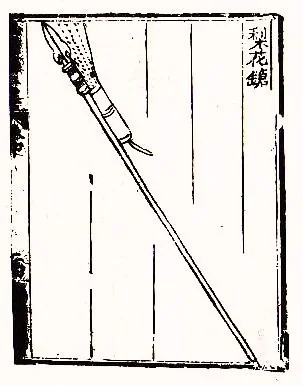
2.2 From Bamboo to Metal: The Hand Cannon
By the late 1200s under the Yuan Dynasty, metallurgists replaced fragile bamboo with cast bronze and iron barrels capable of withstanding greater pressure. The Heilongjiang hand cannon, dated no later than 1288 and excavated in present-day China, is the oldest surviving confirmed firearm. It weighs about 3.55 kg and is 34 cm long. Similar metal-barreled weapons appeared in European records within a few decades.
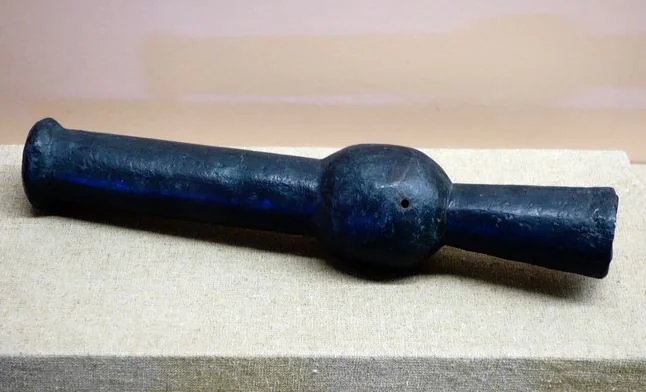
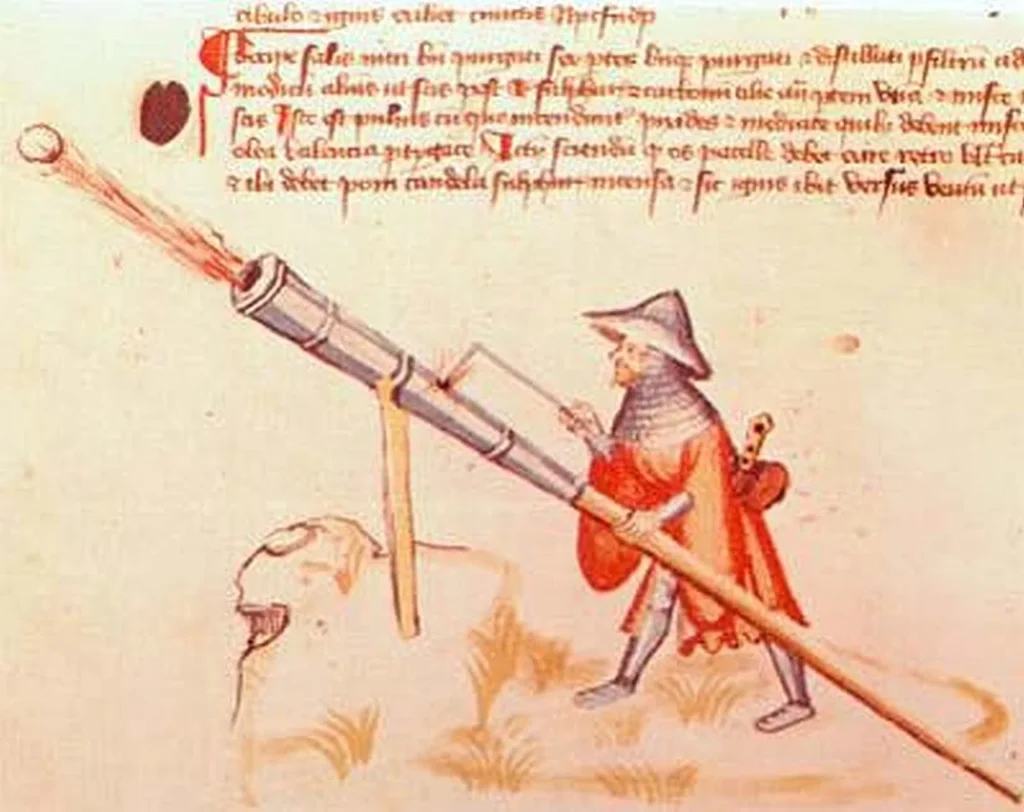
Early metal-barreled hand cannon style. Museum / reconstruction photographs illustrate how heavy and simple the first guns were. Educational use.
2.3 Key Milestones Across the Centuries
Era | Milestone |
9th century | Gunpowder invented in China (alchemical accident) |
Mid-10th century | Earliest known picture of a fire lance (Dunhuang) |
1288 | Heilongjiang hand cannon—oldest surviving firearm |
14th century | Technology spreads across Eurasia; hand cannons in Europe |
1453 | Ottomans use hand cannons and cannon at Constantinople |
c. 1400s–1600s | Matchlock, wheellock and true flintlock mechanisms |
1807 onward | Percussion-cap ignition improves reliability |
1836 | Samuel Colt’s mass-produced revolver with interchangeable parts |
Late 1800s | Smokeless powder replaces black powder |
1947 | Kalashnikov designs the AK-47 |
Early European hand cannons could weigh 30–35 pounds. The technology spread because a recruit could be trained to load and fire a matchlock far faster than a longbowman could be trained, and because high-velocity projectiles eventually made heavy plate armor obsolete.
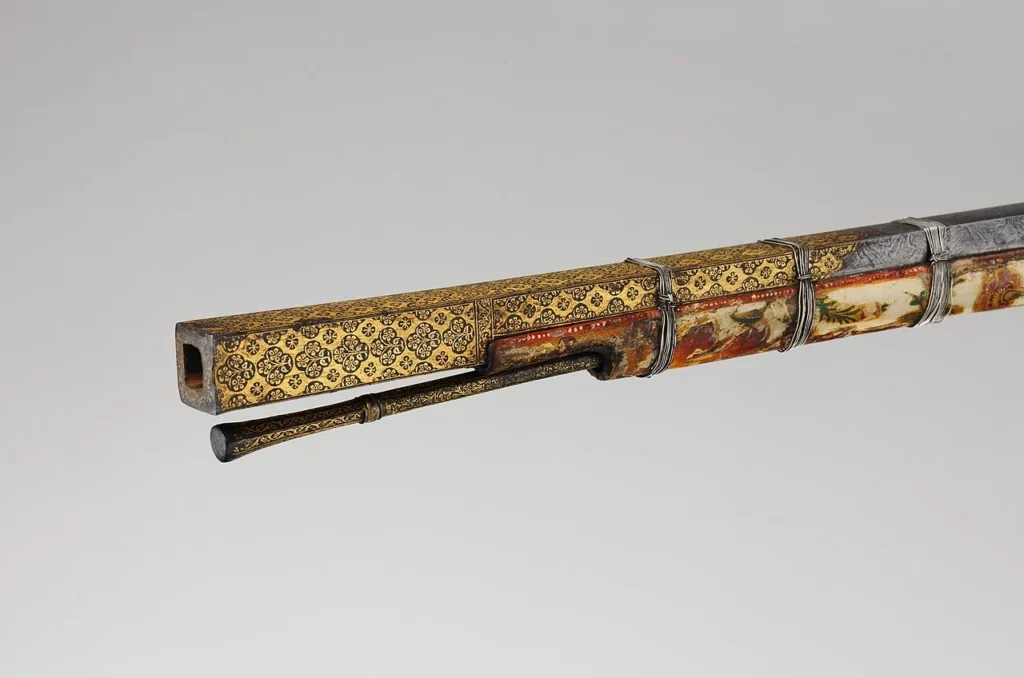
Historical matchlock-style firearm from a museum collection. Matchlocks were among the first practical handheld ignition systems. Educational photograph.
3. What Exactly Is a Firearm?
3.1 Legal and Everyday Definitions
In everyday language “gun” is a broad word for a weapon that launches a projectile. In many legal systems “firearm” has a more precise definition. United States federal law, for example, generally defines a firearm as a weapon that expels, is designed to expel, or may readily be converted to expel a projectile by the action of an explosive (18 U.S.C. § 921). Other countries define and regulate firearms differently. Never assume that a legal definition in one place applies elsewhere.
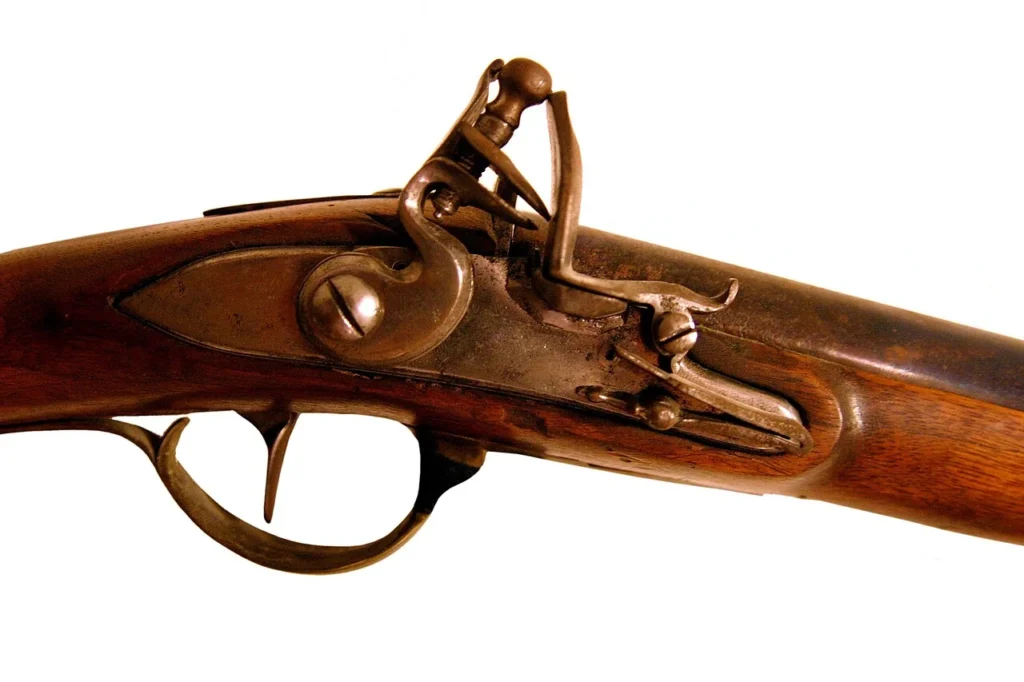
3.2 Lock, Stock and Barrel
Every conventional firearm relies on three core mechanical assemblies that gave rise to the English idiom “lock, stock, and barrel”:
- The Lock (ignition & firing mechanism) — trigger, sear, hammer or striker, and firing pin that initiate propellant combustion.
- The Stock (chassis, frame & grip) — the structural body that houses the action, absorbs recoil and allows steady aiming.
- The Barrel (pressure vessel & trajectory guide) — a precision-bored tube that contains chamber pressure and directs the projectile.
4. The Main Families of Firearms
Researchers who count the world’s guns group civilian firearms into pistols, revolvers, shotguns and rifles. Militaries add automatic and heavy small arms. The legal definition of a “civilian firearm” itself varies: some countries allow civilians to own firearms that others restrict to the military.
4.1 Handguns — Pistols and Revolvers
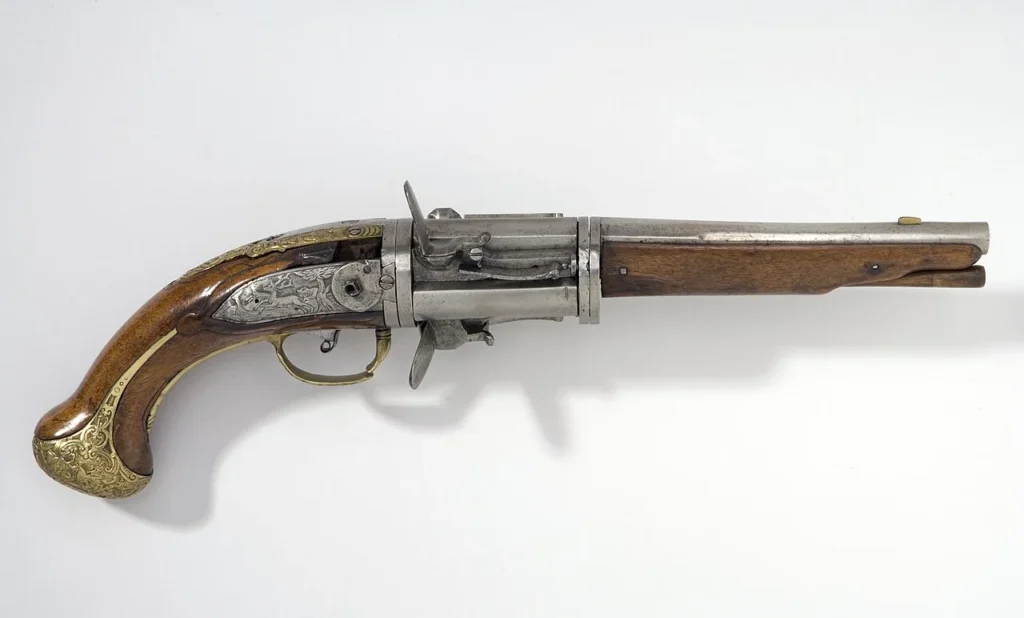
Handguns are compact firearms designed to be held and fired with one or both hands. A revolver uses a rotating cylinder containing multiple chambers. A pistol typically has a chamber integrated with the barrel and often feeds from a detachable magazine. These terms are frequently confused in casual conversation, but they describe different mechanical designs.
4.2 Rifles
A rifle is generally designed to be fired from the shoulder and has a rifled barrel—spiral grooves that impart spin to a projectile for greater accuracy at distance. Rifles appear in sporting competition, hunting (where lawful), military service and law enforcement. Common operating systems include bolt-action, lever-action, pump-action and semi-automatic designs.
4.3 Shotguns
Shotguns are usually shoulder-fired firearms with smoothbore barrels (though specific designs and legal definitions vary). They fire shotshells loaded with multiple spherical pellets (birdshot or buckshot) or a single heavy slug. They are widely used in clay-target sports, bird hunting and certain professional roles.
4.4 Military Small Arms and the AK Family
Armed forces field automatic and heavy small arms. Britannica describes the AK-pattern family as having sold some 100 million units, roughly half of them made outside Russia. The legal boundary between civilian and military firearms differs sharply from country to country.
5. How Firearms Work — High-Level Physics Only
At a broad scientific level, a firearm uses rapidly expanding gases to propel a projectile through a barrel. In modern cartridge-based designs a cartridge typically combines a projectile, a case, a propellant and a primer. When the propellant burns, expanding gas creates pressure that drives the projectile forward. Rifling in many barrels spins the projectile for aerodynamic stability. This overview intentionally stops there—no operational instructions, assembly details or modification guidance. Anyone learning about firearms should use supervised, accredited safety education and follow the manufacturer’s documentation and local law.
6. Who Owns the World’s Guns?
6.1 Global Picture
Overwhelmingly, civilians. Of the roughly 1.013 billion firearms estimated for the end of 2017, about 857 million (85 %) were in civilian hands, 133 million (13 %) with militaries, and 23 million (2 %) with law-enforcement agencies. Civilian holdings had grown from around 650 million in 2006.
6.2 The United States Stands Out
Americans make up roughly 4 % of the world’s population yet own about 393 million civilian firearms—nearly 46 % of the global civilian total, or about 120 guns per 100 residents. The United States ranks far lower in military firearm holdings (behind Russia, China, North Korea and Ukraine in the same estimates).
6.3 Who Owns a Gun Inside the U.S.?
Pew Research Center surveys have found that about four in ten U.S. adults live in a household with a gun, and roughly 32 % personally own one. Ownership differs by group: higher among White adults and rural residents, lower among Asian adults and urban residents. Men report higher ownership rates than women.
7. Why Do People Own Guns?
In U.S. surveys the large majority of gun owners (around 72 %) cite protection as a major reason—far ahead of hunting (≈ 32 %), sport shooting (≈ 30 %), collecting (≈ 15 %) and job-related needs (≈ 7 %). Most owners also say they feel safer owning a gun and enjoy it; a smaller share say they worry about having one in the home.
7.1 The Conservation Connection
A fact that surprises many readers: since the Pittman-Robertson Act of 1937, an 11 % federal excise tax on firearms, ammunition and archery equipment (10 % on handguns) has funded wildlife conservation and hunter education in the United States. In recent years the U.S. Fish and Wildlife Service has apportioned more than a billion dollars annually from these and related taxes to state wildlife agencies.
8. Firearm Laws Around the World
There is no single global rule. Approaches range from rights-based frameworks to highly restrictive licensing regimes. A U.S. Library of Congress comparative study of multiple jurisdictions illustrates the spectrum.
Country / Region | In brief |
United States | Heller (2008) & Bruen (2022) recognise an individual right to keep and bear arms for self-defence; the right is not unlimited. |
Australia | Post-1996 National Firearms Agreement banned certain semi-automatics, required licensing, and ran a large buyback (~650,000 firearms). |
Japan | Strict control since the late 16th century; among the world’s lowest gun-homicide rates. |
Singapore | Extremely restrictive; automatic weapons forbidden for civilians. |
Switzerland | Federalised gun-control rules in 1999 (previously largely cantonal). |
In Pakistan the Pakistan Arms Ordinance, 1965 remains a central legal framework for licensing and possession; rules can also vary by province. Readers everywhere should verify the current requirements of the jurisdiction where a firearm is located—permission in one place does not automatically travel with the owner.
9. The Human Cost: Public-Health Data
In the United States, more than 44,000 people have died from firearm-related injuries in recent single years—still among the higher totals on record. Suicides typically account for roughly 60 % or more of those deaths, with homicides making up most of the remainder. Firearms are involved in the large majority of U.S. homicides. Gun suicides have set successive records in recent years and remain concentrated in rural states.
If this topic affects you: If you or someone you know is struggling with thoughts of self-harm, please reach out to a local crisis line, a doctor or a trusted person. In the United States, call or text 988. This is an editorial note, not a statistic.
10. The Debate: Two Ways of Seeing the Same Numbers
Few topics split opinion like firearms. Surveys show Americans remain nearly evenly divided on whether protecting the right to own guns or controlling gun ownership matters more. Views on safety also polarize sharply along partisan lines.
The rights-and-self-reliance view | The public-health-and-regulation view |
Gun ownership is an individual right protected by the Second Amendment as interpreted in Heller and Bruen. | Firearms are a major, preventable cause of death (especially suicide), so access should be tightly managed. |
Most owners cite protection and say they feel safer owning a gun. | Stricter licensing and registration (Australia, Japan, Britain) correlate with lower gun-death rates, supporters argue. |
Hunting and sport shooting fund conservation and sustain cultural traditions. | The sheer number of guns in circulation raises risks for children and in moments of crisis. |
Critics of the 1996 Australian buyback note that gun suicides were already declining and question long-term causality. | Supporters point to declining gun deaths and the absence of gun-related mass killings in Australia since 1996. |
The honest takeaway: the factual numbers above are widely accepted. How to weigh individual rights, public safety, cultural tradition and prevention is a values question—and reasonable people disagree.
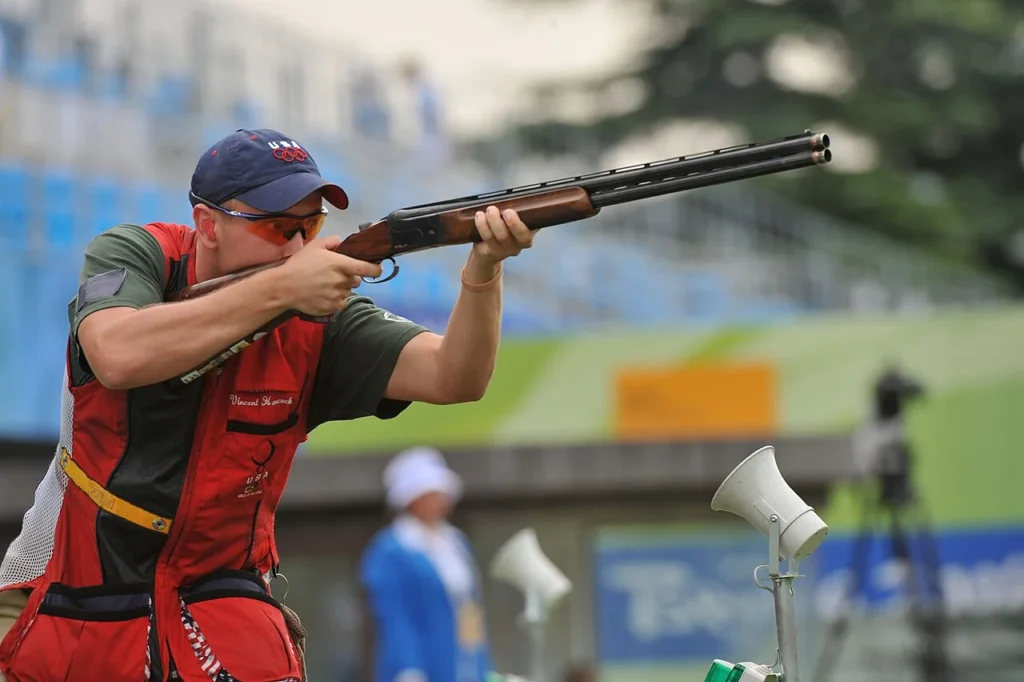
Olympic skeet competition. Sport shooting is one of the regulated, rule-governed contexts in which firearms appear. Wikimedia Commons / U.S. Army (public domain).
11. Ten Surprising (and True) Firearm Facts
- The first “gun” most historians recognise was a bamboo tube of black powder fixed to a spear—the fire lance of 10th-century China.
- The oldest surviving confirmed firearm, the Heilongjiang hand cannon, dates to no later than 1288 and weighs about 3.55 kg.
- Gunpowder was likely an accidental by-product of Chinese alchemists hunting for an immortality elixir.
- Roughly 100 million AK-pattern rifles have been made—about half of them outside Russia.
- Civilians hold about 85 % of all firearms on Earth.
- The United States has ~4 % of the world’s people but ~46 % of civilian guns.
- Japan has regulated guns tightly since the late 16th century and records among the world’s lowest gun-homicide rates.
- A 1937 U.S. federal tax on firearms and ammunition still funds wildlife conservation and hunter education today.
- Australia’s post-1996 National Firearms Agreement and buyback removed roughly 650,000 firearms from civilian circulation.
- Global civilian firearm holdings grew from an estimated 650 million in 2006 to 857 million in 2017.
12. Firearm Safety: The Non-Negotiable Basics
Safety is not a slogan; it is a practical responsibility. The four universal rules taught by major shooting organisations (and echoed by public-health agencies) are:
- Treat every firearm as if it is loaded.
- Never point the muzzle at anything you are not willing to destroy.
- Keep your finger off the trigger until the sights are on target.
- Be certain of your target and what lies beyond it.
Secure storage that prevents unauthorised access—especially by children—is equally critical. Never handle a firearm while impaired. If you encounter an unattended or unfamiliar firearm, do not touch it; move away and contact responsible authorities. Accredited, in-person safety courses remain the proper place to learn practical handling.
Frequently Asked Questions
When were guns invented?
Gunpowder dates to 9th-century China. Fire lances—the first guns by most historians’ reckoning—appeared by the 10th century. Metal-barreled hand cannons followed in the 13th century.
How many guns are there in the world?
Just over one billion as of the end of 2017, according to the Small Arms Survey, with roughly 857 million in civilian hands. No newer comprehensive global count has superseded that benchmark.
Which country has the most civilian guns?
The United States, with an estimated 393 million—about 46 % of the world’s civilian total.
Why do people own guns?
In the United States the leading reason is protection (around 72 % of owners), followed by hunting, sport shooting, collecting and work.
What is the difference between a pistol and a revolver?
A revolver uses a rotating cylinder containing multiple chambers. A pistol typically has a chamber integrated with the barrel.
Are firearms legal everywhere?
No. Laws vary dramatically between countries and often within them. Licensing, prohibited categories, carrying rules and storage requirements must be checked locally.
What does semi-automatic mean?
Broadly, a semi-automatic firearm fires one shot per trigger press and uses its mechanism to prepare the next round. Legal definitions can be more precise and jurisdiction-specific.
What is the most important safety principle?
Treat every firearm as potentially dangerous, prevent unauthorised access, avoid casual handling and seek accredited safety training. Never touch an unfamiliar firearm.