Explore history through time
Transportation Timeline: The Evolution of Travel
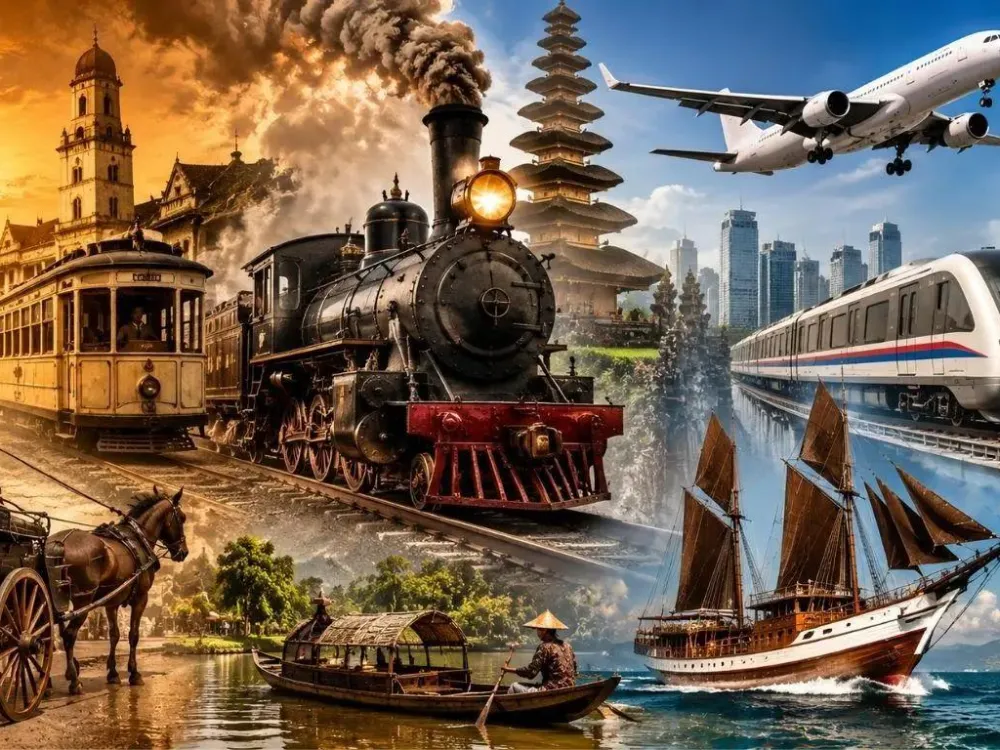
From ancient boats and horse-drawn carts to steam trains, automobiles, airplanes and space rockets, explore how transportation evolved and transformed the way people travel, trade and connect.
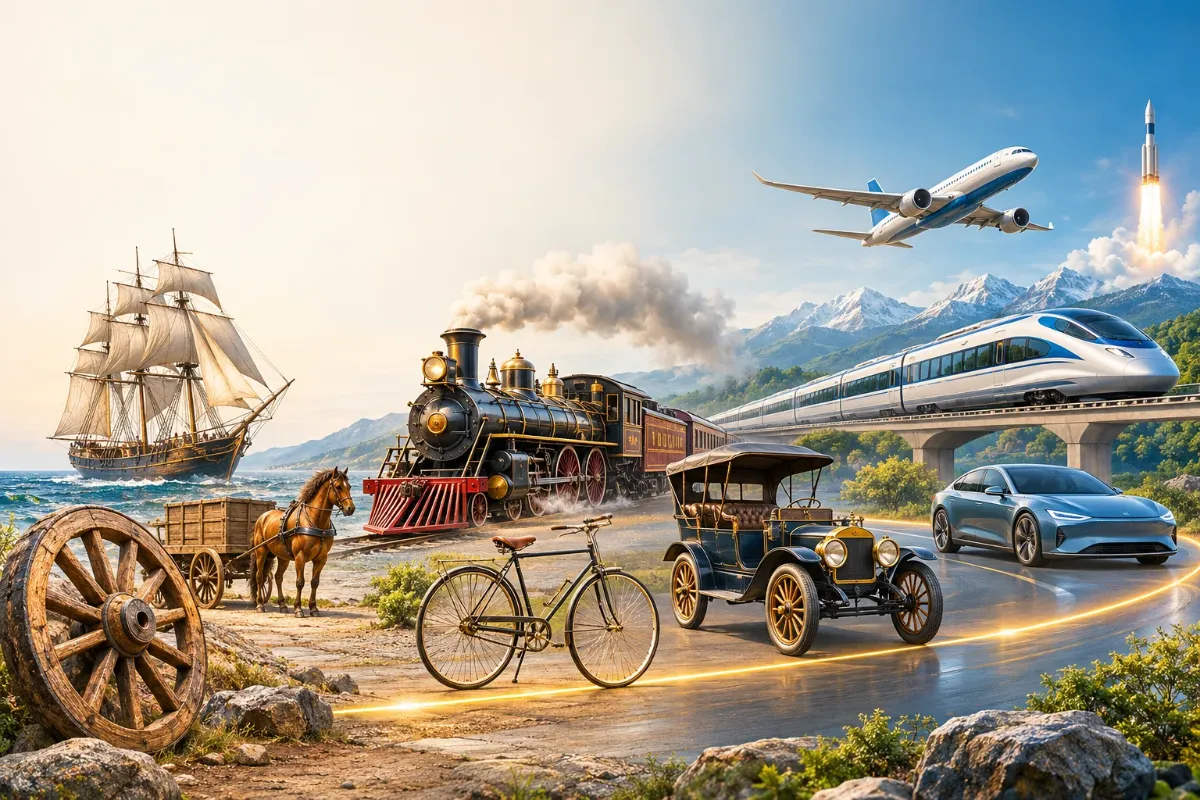
A journey through time
The History of Transportation: A Journey Through Time
Transportation has shaped human civilization for thousands of years. What began with walking, carrying goods and using animals gradually developed into boats, wheeled vehicles, railways, automobiles and aircraft. Each advancement helped people travel farther, move goods more efficiently and connect communities across greater distances.
The evolution of transportation also reflects major changes in engineering, energy and technology. Sailing vessels connected distant ports, steam-powered trains transformed overland travel, automobiles made personal mobility more accessible, and airplanes made long-distance journeys significantly faster.
Today, electric vehicles, high-speed rail, advanced aviation and space exploration continue that story.
This page is your starting point. Scan the milestones below for a quick overview, then open a dedicated timeline for airplanes, cars, trains, ships, rockets, or motorcycles and bicycles, each with dates, pictures and the inventions that defined every era.
From footpaths to orbit
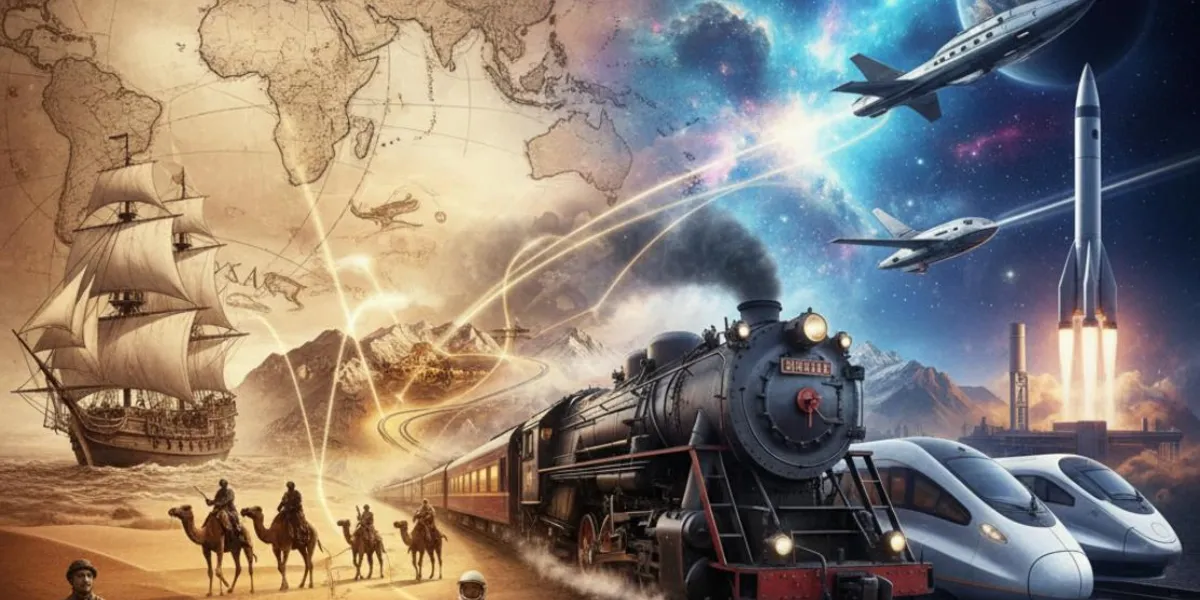
Major Milestones in the Evolution of Transportation
Seven turning points that changed how far, how fast and how freely people could move.
Prehistory
Early Human Movement
Walking, carrying goods, pack animals and simple watercraft such as dugout canoes formed the foundations of mobility.
c. 3500 BCE
Wheeled Transport
Early evidence of wheels and wheeled vehicles from Mesopotamia and Europe marks a major turning point in land transportation.
Ancient world onward
Sailing and Maritime Travel
Boats and sailing ships supported trade, migration and connections between distant coasts and regions.
19th century
Steam-Powered Railways
From the first steam locomotives of the early 1800s, railways carried passengers and heavy goods over long distances at new speeds.
Late 19th century onward
Modern Automobiles
Motor cars, starting with Karl Benz’s patented Motorwagen of 1886, and expanding road networks changed personal travel and urban life.
1903 onward
Powered Aviation
The Wright brothers’ first powered, controlled flight in 1903 launched a new era of air transportation.
20th century onward
Spaceflight
Rockets and spacecraft, from Sputnik in 1957 to crewed Moon landings in 1969, took transportation beyond Earth’s atmosphere.
Choose your journey
Explore Transportation Evolution by Category
Each timeline follows one form of transport from its first experiments to today’s technology. Pick a category to start exploring.
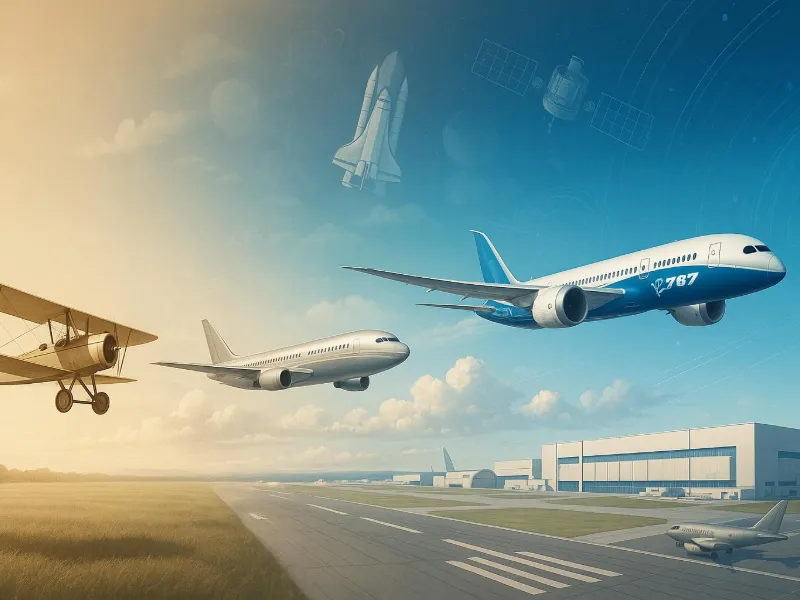
Evolution of Airplanes
Discover how aviation progressed from the Wright brothers’ first powered flight in 1903 to propeller airliners, the jet age and today’s long-range aircraft. Explore innovations in airplane design, cabin layout and passenger comfort, and see how faster, safer flights turned once-rare journeys into everyday global travel.
Inside this timeline: airplane timeline with pictures, airplane seats, airplane design
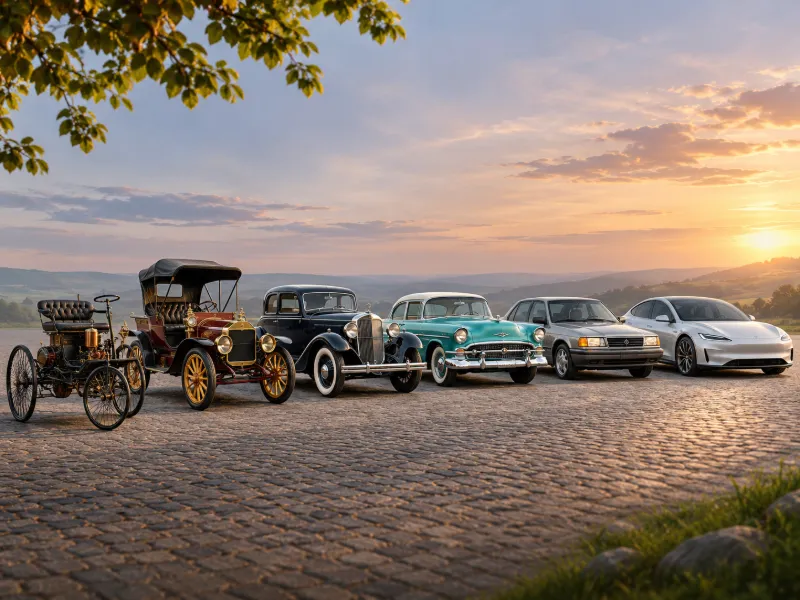
Evolution of Cars
Follow the journey from Karl Benz’s Motorwagen, patented in 1886, to mass-produced family cars, modern safety features and electric vehicles. Discover how engines, interiors and body design changed as the automobile moved from a rare luxury to an everyday necessity that reshaped roads, cities and daily life.
Inside this timeline: cars from 1886 to 2026, cars timeline with pictures, car seats
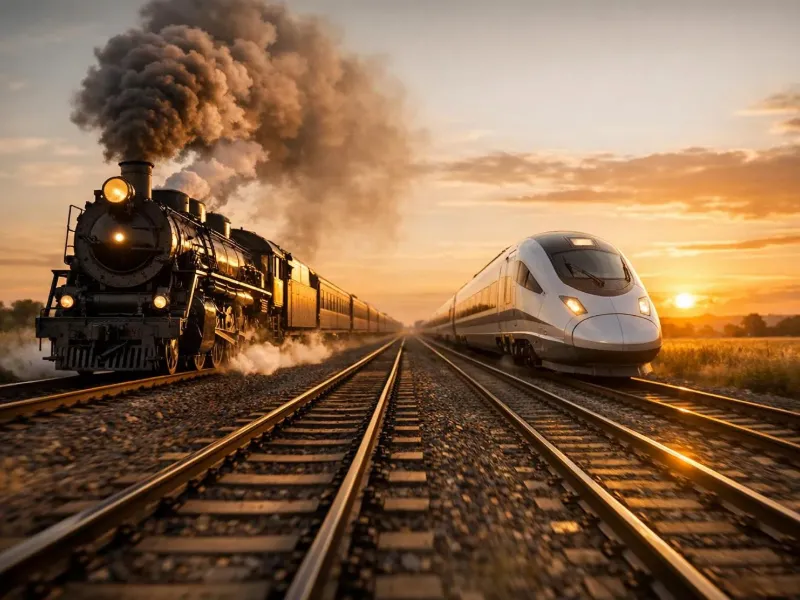
Evolution of Trains
Travel through railway history, from early-1800s steam locomotives to diesel and electric trains and the high-speed rail era that began with Japan’s Shinkansen in 1964. Explore how railways moved people and heavy goods across continents, shaped towns and industries, and became essential to modern transportation.
Inside this timeline: trains over time, trains in India, trains for kids
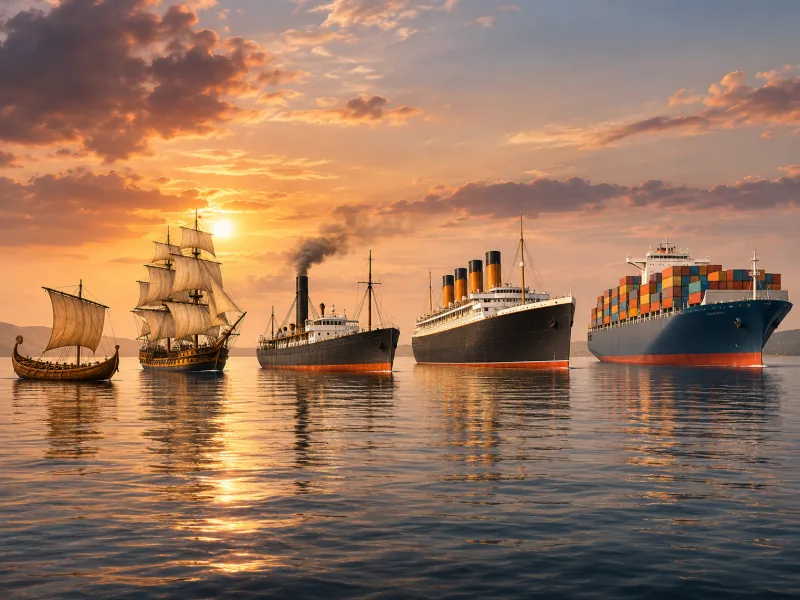
Evolution of Ships
Explore the history of water transport, from ancient dugout canoes and sailing vessels to steamships, giant container carriers and modern passenger ships. Discover how hull design, navigation and marine engines made long ocean crossings safer and faster, and why shipping still carries most of the world’s traded goods.
Inside this timeline: ships from ancient to modern era, ship design, ship engines
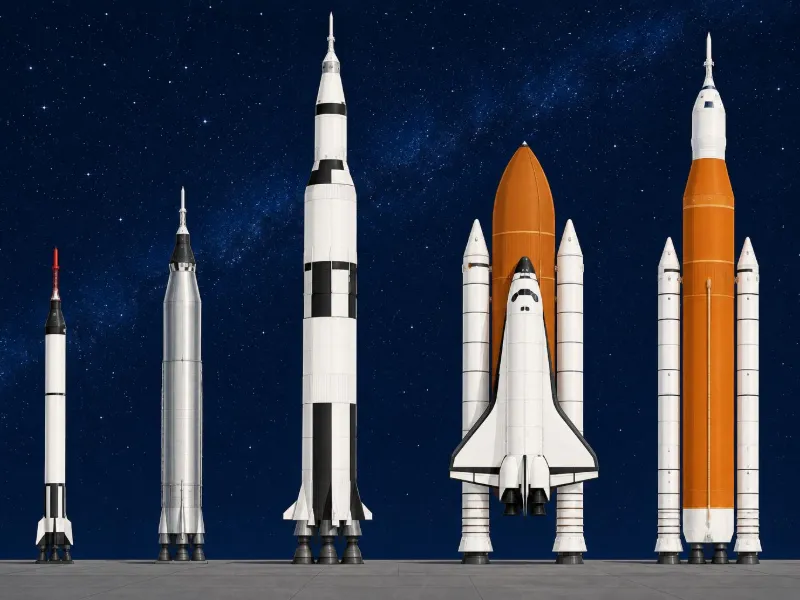
Evolution of Rockets & Spacecraft
Discover the technology that carried exploration beyond Earth. Follow rockets from Robert Goddard’s first liquid-fuelled launch in 1926 to Sputnik, the Apollo Moon missions and reusable boosters, and see how spacecraft evolved from single-seat capsules to modern crewed and cargo vehicles.
Inside this timeline: space rockets, NASA rockets, SpaceX rockets
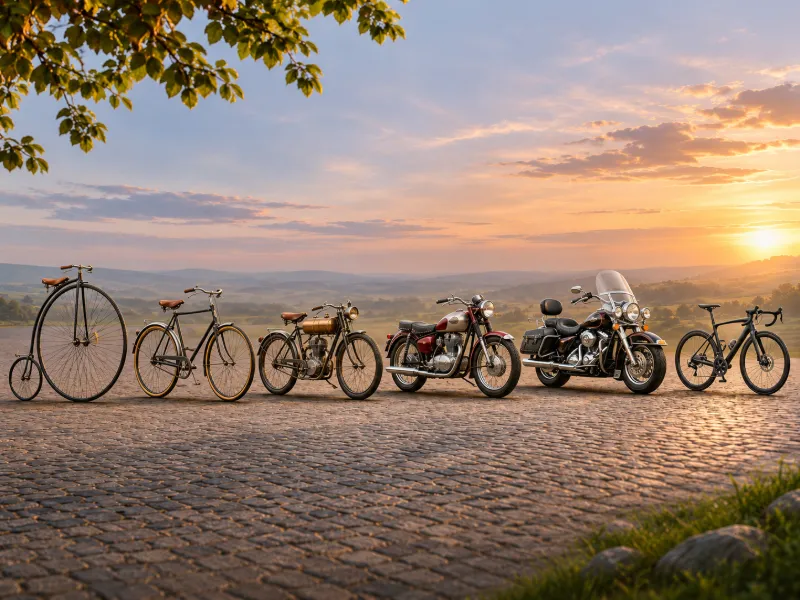
Evolution of Motorcycles & Bicycles
Explore two-wheeled transport, from Karl Drais’s pedal-less running machine of 1817 to the chain-driven safety bicycle and the first motorised two-wheelers of the 1880s. Discover how frames, engines and engineering evolved, and how makers such as Honda, Harley-Davidson and BMW shaped modern motorcycling.
Inside this timeline: bicycle evolution, Honda motorcycles, Harley-Davidson motorcycles, BMW motorcycles
The full story
Complete Transportation History
Want to see transportation as one continuous journey? Our complete overview follows the full chronology, from prehistoric travel and ancient trade routes to railways, cars, flight and spaceflight, with dated milestones, ancient-to-modern comparisons and beginner-friendly visual explanations for students and curious readers.
Inside this timeline: evolution of transportation timeline, ancient-to-modern transportation, transportation for kids, transportation images
Why it matters
How Transportation Changed Human Civilization
Every leap in transport reshaped more than travel. It changed what people could buy, who they could meet and how societies grew.
Global Trade
Ships, railways and aircraft created networks for international commerce. Goods that once stayed close to where they were made could reach distant markets, linking economies and shaping the trade routes that still connect the world.
Human Connection
Faster travel brought families, communities and cultures closer together. Journeys that took months by sail or on foot shrank to days by rail and hours by air, making migration, tourism and cultural exchange part of everyday life.
Technology & Innovation
Advances in engines, materials, navigation and design reshaped transportation, and transport in turn drove wider innovation, from standardised time zones for railways to precision engineering and the electronics now built into every vehicle.
Sustainable Mobility
Electric vehicles, public transit and cleaner fuels are influencing the next generation of travel. The challenge is to keep the benefits of fast, affordable transport while reducing emissions, congestion and noise.
What comes next
The Future of Transportation: What Comes Next?
Transportation continues to evolve as engineers and researchers develop new ways to travel more efficiently, safely and sustainably. Electric vehicles are changing road transport, while improvements in batteries, charging infrastructure and renewable energy are influencing the future of mobility.
Autonomous driving systems, high-speed rail, advanced aviation technologies and reusable rockets may further transform the movement of people and goods. However, their adoption depends on safety, infrastructure, cost, regulations and environmental impact.
The future of transportation will be shaped not by a single invention, but by the continued development of interconnected technologies.
Electric Vehicles
Battery-electric cars and buses cut tailpipe emissions and are quieter in cities. Their climate benefit depends on how the electricity is generated, and cost, range and charging access still limit adoption in many regions.
Autonomous Systems
Self-driving and driver-assistance technology aims to reduce crashes caused by human error and improve access for people who cannot drive. Full autonomy still faces hard questions of safety validation, liability and regulation.
High-Speed Rail
High-speed trains can link cities faster than flying on many short and medium routes, with lower emissions per passenger. Lines are expensive and slow to build, and they work best between busy, closely spaced cities.
Aviation Innovation
Lighter materials, more efficient engines, sustainable aviation fuels and early electric and hydrogen designs aim to cut aviation’s emissions. Long-haul flights remain hard to decarbonise because of the energy density they require.
Reusable Rockets
Boosters that land and fly again, first demonstrated on orbital launches in the mid-2010s, have lowered the cost of reaching space. Refurbishment, reliability and the environmental effects of frequent launches are still being studied.
Frequently Asked Questions About Transportation History
What is the evolution of transportation?
The evolution of transportation is the long history of how people moved themselves and their goods, from walking and pack animals to boats, wheeled carts, railways, cars, aircraft and rockets. Each stage built on new sources of power and new materials, making travel faster, cheaper and able to cover far greater distances.
What were the earliest forms of transportation?
The earliest transport was walking and carrying loads. People also built rafts and dugout canoes; one of the oldest boats found, the Pesse canoe from the Netherlands, dates to roughly 8000 BCE. Later, domesticated animals such as donkeys, oxen and horses carried goods and pulled vehicles.
How did the invention of the wheel change transportation?
The wheel helped make wheeled carts and vehicles possible, improving the movement of goods across suitable terrain. Wheeled vehicles appear around 3500 BCE, first pulled by oxen. Lighter spoked wheels later enabled faster chariots, and the same principle sits at the heart of bicycles, trains and cars today.
When did modern transportation begin?
Most historians link modern transportation to the steam age of the early 19th century, when steam locomotives and steamships began replacing muscle and wind power. The internal combustion engine in the 1880s and powered flight in 1903 then set the foundations for the cars and aircraft we use today.
How did airplanes change transportation?
Airplanes made it possible to cross oceans and continents in hours rather than days or weeks. After the Wright brothers’ 1903 flight, aviation grew rapidly, and jet airliners in the 1950s opened long-distance travel to millions of passengers, reshaping tourism, business and global trade.
What transportation technologies could shape the future?
Electric vehicles, autonomous driving, high-speed rail, cleaner aviation fuels and reusable rockets are among the most discussed. Their impact will depend on safety, cost, infrastructure and regulation, so the future is likely to combine several technologies rather than rely on one breakthrough.
Keep exploring
Explore the History of Transportation, One Invention at a Time
From the earliest wheeled vehicles to modern spacecraft, every transportation innovation has a story worth discovering. Explore our detailed visual timelines and learn how technology transformed the way the world moves.