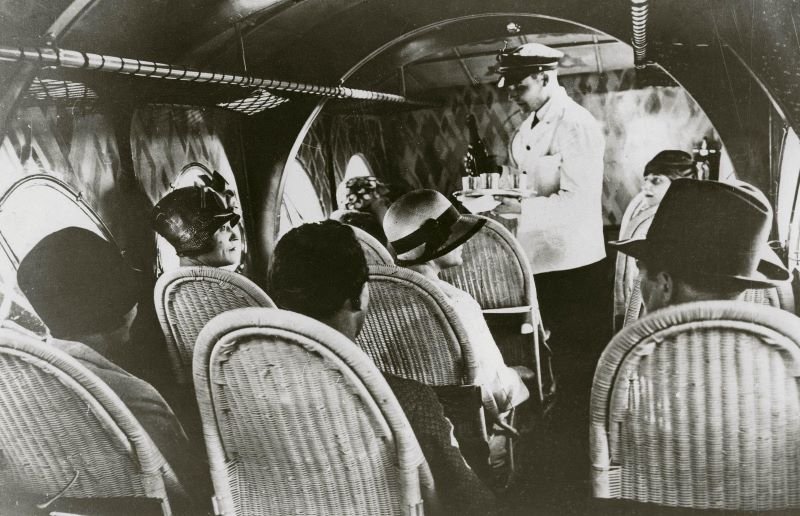
Falling Skies: Major Airplane Crashes That Changed Aviation Forever
The deadliest plane crashes of all time, the investigations that decoded them, black-box lessons, Crew Resource Management, and the aviation safety rules written in their wreckage.
In 2025 airlines flew approximately 38.7 million flights. IATA recorded eight fatal accidents. Those are astonishing odds, and they exist because of a handful of terrible days. Some are burned into global memory: the Tenerife airport disaster, Japan Airlines 123 on a Japanese mountain, the Air India 171 Dreamliner that fell seconds after take-off, the Jeju Air 2216 belly landing, and the Potomac River mid-air collision. Behind each major airplane crash is a quieter story of investigators, engineers and pilots who refused to let the lesson go to waste.
This is not just a list of the worst plane crashes in history. It is the complete timeline of how the aircraft crash became aviation’s most powerful teacher — from the first powered-flight fatality at Fort Myer in 1908 to the modern era of automation, terrorism and software — with the rule or technology that each disaster left behind
The Deadliest Aviation Accidents at a Glance
Ranked by lives lost in a single accident (excluding the 9/11 attacks, which are covered separately). Tenerife is counted as 583 by the Aviation Safety Network and Guinness World Records.
# | Accident | Date | Deaths | Type |
1 | Tenerife airport disaster | 27 Mar 1977 | 583 | Runway collision |
2 | Japan Airlines 123 | 12 Aug 1985 | 520 | Structural failure |
3 | Charkhi Dadri collision | 12 Nov 1996 | 349 | Mid-air collision |
4 | Turkish Airlines 981 | 3 Mar 1974 | 346 | Cargo door failure |
5 | Air India 182 | 23 Jun 1985 | 329 | Bomb |
6 | Saudia 163 | 19 Aug 1980 | 301 | Fire on board |
7 | Malaysia Airlines 17 | 17 Jul 2014 | 298 | Missile |
8 | Iran Air 655 | 3 Jul 1988 | 290 | Shot down |
Sources: Aviation Safety Network · Guinness World Records · Al Jazeera · Yahoo
The Evolution of Air Disasters: A Complete Timeline
Each era of major airplane crashes had its own enemy: weak materials, unseen skies, sheer size, terrorism, automation confusion and, today, software and oversight.
Era 1 · The Pioneer Years (1908–1950s): Flying Was a Gamble
Wood, fabric, wire and courage. Every early flight was an experiment, and every failure wrote a page of the aviation textbook.
1908 | Fort Myer — The First Powered-Flight Fatality
DATE: 17 September 1908 · AIRCRAFT: Wright Military Flyer · DEATHS: 1 · CAUSE: Propeller failure
Barely five years after Kitty Hawk, Orville Wright was demonstrating his machine to the US Army when a propeller blade cracked in flight and the aircraft plunged to the ground. Passenger Lt. Thomas Selfridge died — the first person killed in a powered aeroplane crash. Orville survived with broken bones.
WHAT IT CHANGED: It established the pattern that still drives aviation safety: failure, investigation, fix.
FUN FACT: Selfridge had been a member of Alexander Graham Bell’s Aerial Experiment Association before he joined the Army.
1956 | Grand Canyon Mid-Air Collision
DATE: 30 June 1956 · AIRCRAFT: United Airlines DC-7 & TWA Super Constellation · DEATHS: 128 · CAUSE: Mid-air collision over Grand Canyon
Two airliners collided in uncontrolled airspace over the Grand Canyon. All 128 people aboard both aircraft died. The disaster exposed the limits of the “see and be seen” system and led directly to the creation of the modern air-traffic-control network and the Federal Aviation Agency (later FAA).
WHAT IT CHANGED: Birth of positive air-traffic control and the modern ATC system in the United States.
Era 2 · The Jet Age (1950s–1970s)
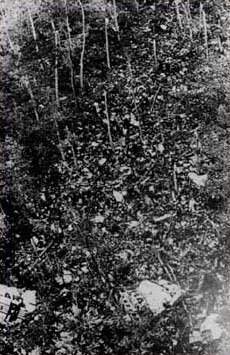
1974 | Turkish Airlines Flight 981 — Cargo Door Failure
DATE: 3 March 1974 · AIRCRAFT: McDonnell Douglas DC-10 · DEATHS: 346 · CAUSE: Cargo door failure
Minutes after leaving Paris an improperly latched rear cargo door blew out. The cabin floor collapsed and severed the control cables. The aircraft dived into the Ermenonville forest.
WHAT IT CHANGED: Cargo-door latching system redesigned; mandatory fixes applied to the DC-10 fleet.
Era 3 · The Jumbo-Jet Disasters (1977–1989)
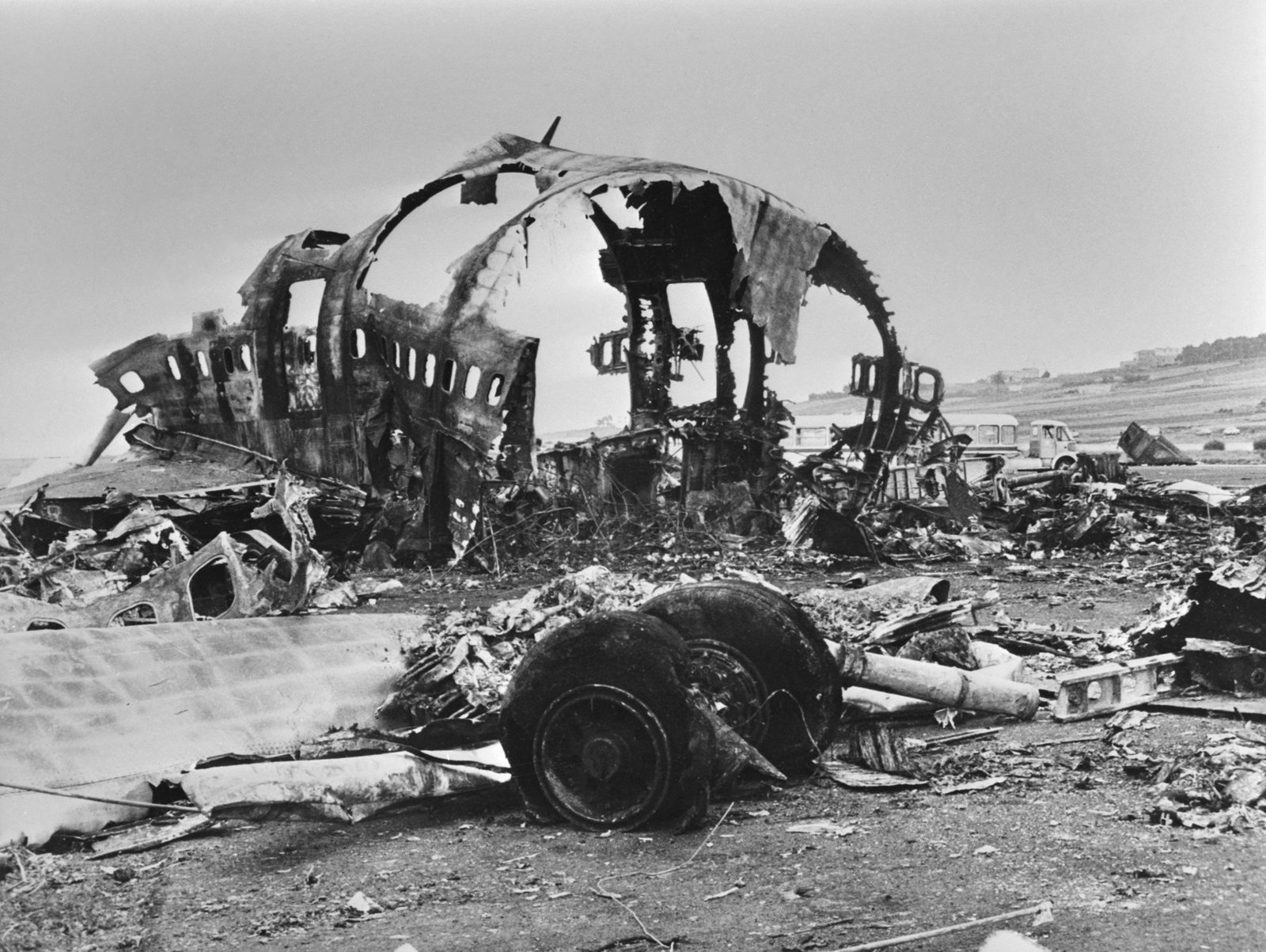
1977 | Tenerife Airport Disaster — Deadliest Accident in History
DATE: 27 March 1977 · AIRCRAFT: KLM 747 & Pan Am 747 · DEATHS: 583 · CAUSE: Runway collision in fog
A bomb scare diverted two jumbo jets to Los Rodeos. In dense fog the KLM crew began take-off without clearance and struck the Pan Am 747 still on the runway. 583 people died — the highest death toll of any aviation accident and still the deadliest plane crash in history.
WHAT IT CHANGED: Strict standard phraseology and Crew Resource Management (CRM) training worldwide.
FUN FACT: The deadliest accident in aviation history happened on the ground — neither aircraft ever left the runway.
1985 | Japan Airlines Flight 123 — Deadliest Single-Aircraft Crash
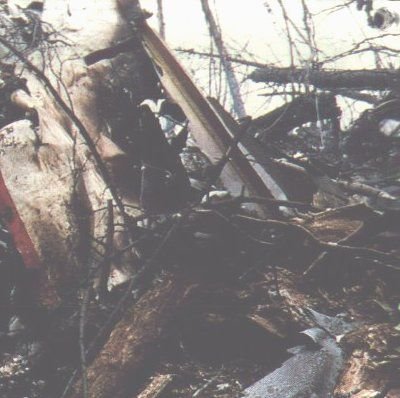
DATE: 12 August 1985 · AIRCRAFT: Boeing 747SR · DEATHS: 520 (4 survivors) · CAUSE: Faulty bulkhead repair
Twelve minutes after take-off the rear pressure bulkhead ruptured, ripping away the tail and all hydraulic systems. The crew kept the aircraft flying for roughly half an hour before it hit a mountain ridge. It remains the deadliest single-aircraft crash in history.
WHAT IT CHANGED: Global spotlight on maintenance quality and repair inspection standards.
FUN FACT: Four passengers, all women, survived the crash itself — an extraordinary outcome given the impact forces.
1985 | Air India Flight 182 — Terror at 31,000 Feet
DATE: 23 June 1985 · AIRCRAFT: Boeing 747-237B “Kanishka” · DEATHS: 329 · CAUSE: Bomb in checked baggage
A bomb planted by Sikh extremists exploded on the Toronto–London–Bombay flight, and the jet fell into the Atlantic off Ireland. It was the deadliest terrorist attack in aviation history until 9/11, and remains the largest mass murder in Canadian history.
WHAT IT CHANGED: Accelerated passenger–baggage reconciliation and explosives screening across the industry.
FUN FACT: The suitcase holding the bomb travelled without a passenger — exposing how weak baggage matching was at the time.
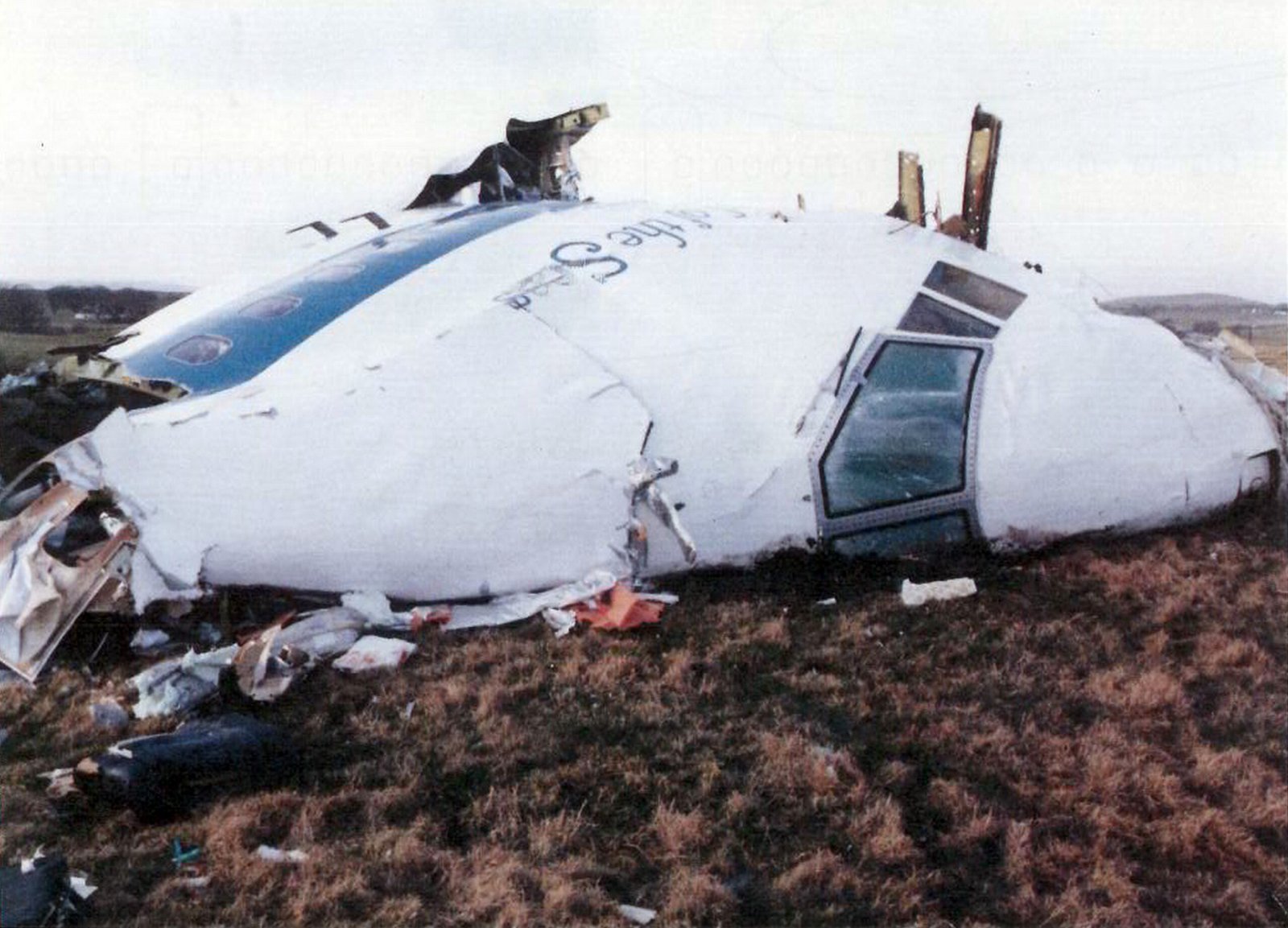
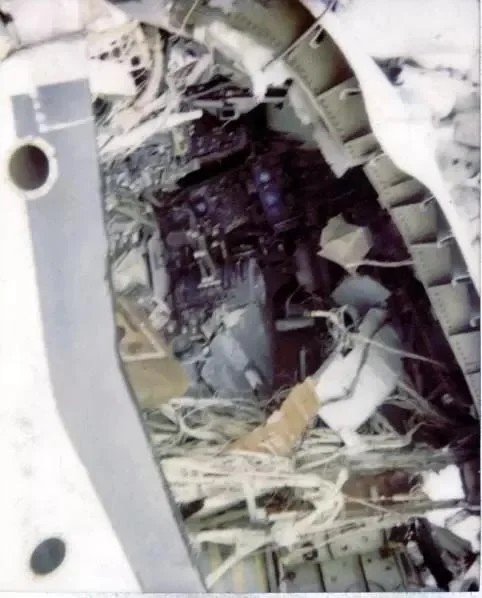
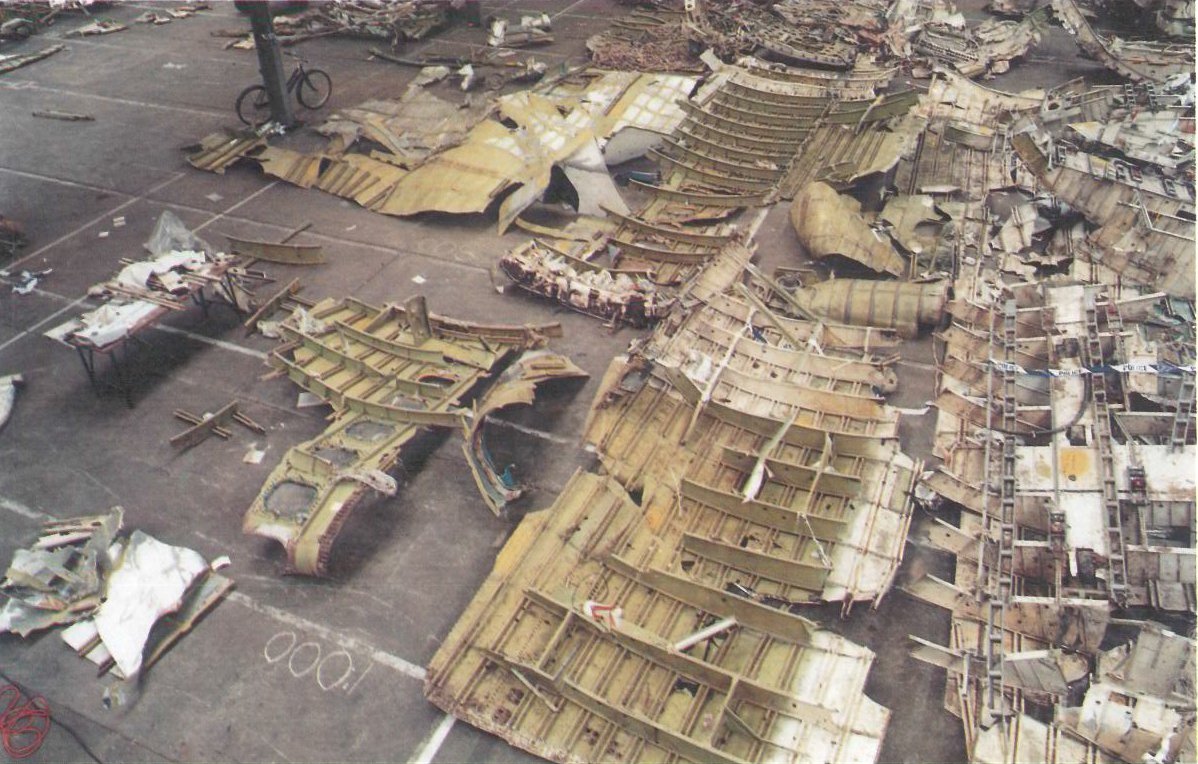
1988 | Pan Am Flight 103 (Lockerbie)
DATE: 21 December 1988 · AIRCRAFT: Boeing 747-121 · DEATHS: 270 (259 + 11 ground) · CAUSE: Bomb
A bomb hidden in a cassette player inside a suitcase tore apart the 747 over Lockerbie, Scotland, three days before Christmas. Wreckage rained on the town.
WHAT IT CHANGED: Explosive-detection technology and strict baggage-handling and reconciliation rules became standard.
1989 | United Airlines Flight 232 — The “Impossible” Landing
DATE: 19 July 1989 · AIRCRAFT: McDonnell Douglas DC-10 · DEATHS: 112 of 296 · CAUSE: Uncontained engine failure
A fan disk in the tail engine disintegrated, cutting all three hydraulic systems. With no conventional control, Captain Al Haynes and his crew steered the DC-10 using only differential engine thrust and crash-landed at Sioux City. 184 people survived.
WHAT IT CHANGED: Greater emphasis on crew resource management and engine-disc inspection.
FUN FACT: The crew managed to fly and land a completely uncontrollable DC-10 using only engine thrust — one of the most remarkable feats of airmanship in history.
Era 4 · Terrorism & Modern Security (1990s–2001)
1996 | Charkhi Dadri Mid-Air Collision
DATE: 12 November 1996 · AIRCRAFT: Saudi Boeing 747 & Kazakhstan Ilyushin Il-76 · DEATHS: 349 · CAUSE: Mid-air collision
The two aircraft collided near New Delhi after the Kazakhstan crew failed to maintain assigned altitude. It remains the deadliest mid-air collision in history.
WHAT IT CHANGED: Accelerated the worldwide adoption of TCAS (Traffic Collision Avoidance System).
2001 | September 11 Attacks
DATE: 11 September 2001 · AIRCRAFT: Four hijacked US airliners · DEATHS: 2,977 victims (2,996 including 19 hijackers) · CAUSE: Terrorist attack
Four airliners were hijacked. Two struck the World Trade Center, one hit the Pentagon and the fourth crashed in Pennsylvania after passengers fought back. It remains the deadliest aviation-related disaster ever recorded.
WHAT IT CHANGED: Reinforced locked cockpit doors, tougher passenger screening, creation of the TSA and a global rethink of aviation security.
FUN FACT: For the first time ever, all civil air traffic in US airspace was ordered to land, and the skies fell silent for days.
Era 5 · The Automation Paradox (2009–2015)
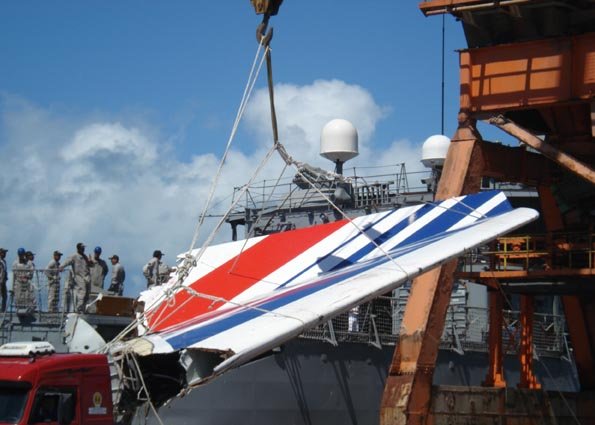
2009 | Air France Flight 447
DATE: 1 June 2009 · AIRCRAFT: Airbus A330 · DEATHS: 228 · CAUSE: Stall after pitot icing
The aircraft lost airspeed readings, the autopilot disconnected, and the crew entered a stall from which they never recovered. Wreckage was found two years later nearly 4 km deep.
WHAT IT CHANGED: Expanded stall and upset-recovery training; new pitot probes.
2010 | Airblue Flight 202 — Pakistan’s Darkest Day
DATE: 28 July 2010 · AIRCRAFT: Airbus A321 · DEATHS: 152 · CAUSE: Controlled flight into terrain
Flying from Karachi to Islamabad, the aircraft flew into the Margalla Hills while circling in poor weather. All 152 on board died. It remains the deadliest aviation accident on Pakistani soil.
WHAT IT CHANGED: Greater focus on terrain-awareness warnings and approach discipline at Islamabad.
Era 6 · Modern Era (2018–2026)
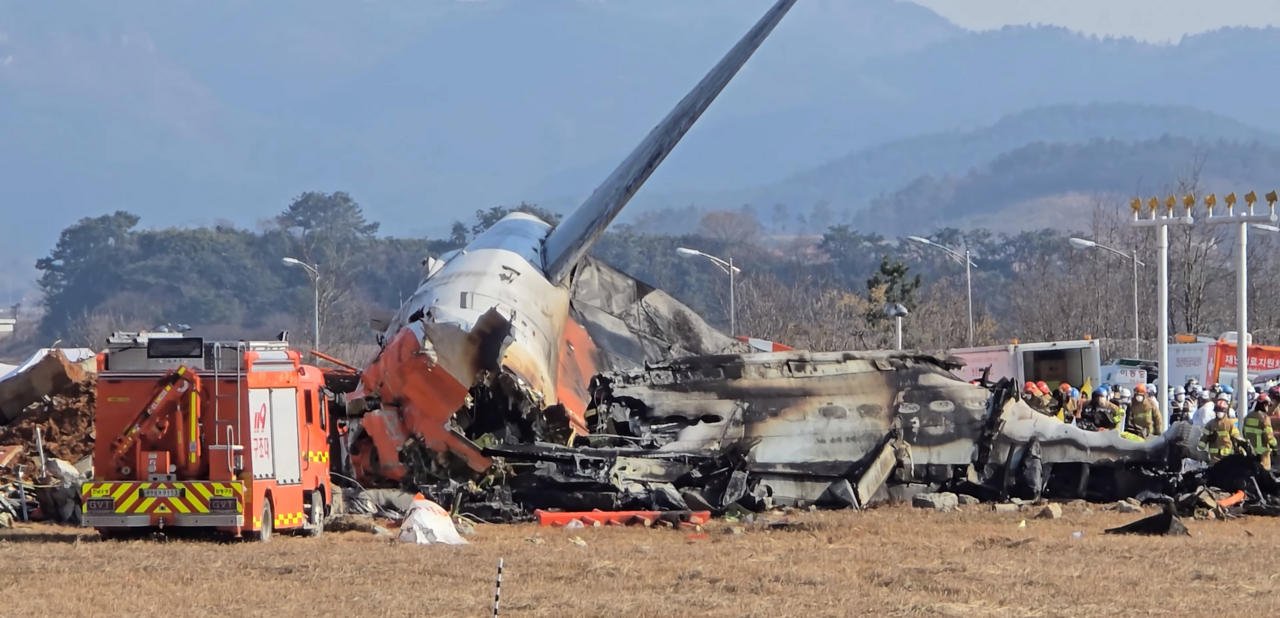
2024 | Jeju Air Flight 2216
DATE: 29 December 2024 · AIRCRAFT: Boeing 737-800 · DEATHS: 179 of 181 · CAUSE: Under investigation (bird strike + belly landing)
Returning from Bangkok the aircraft reported a bird strike, landed on its belly at Muan Airport, slid off the runway and hit a concrete embankment. Only two crew members survived.
2025 | Potomac River Mid-Air Collision
DATE: 29 January 2025 · AIRCRAFT: American Eagle CRJ700 & U.S. Army Black Hawk · DEATHS: 67 · CAUSE: Mid-air collision
A regional jet on final approach to Reagan National collided with an Army helicopter over the Potomac River. Everyone on both aircraft died.

2025 | Air India Flight 171
DATE: 12 June 2025 · AIRCRAFT: Boeing 787-8 Dreamliner · DEATHS: 260 (241 aboard + 19 ground) · CAUSE: Under investigation (fuel cut-off)
Seconds after lift-off from Ahmedabad both engines lost power. The 787 crashed into a medical-college complex. Preliminary report found fuel-control switches moved from RUN to CUTOFF. Final report still pending as of November 2026. One passenger survived.
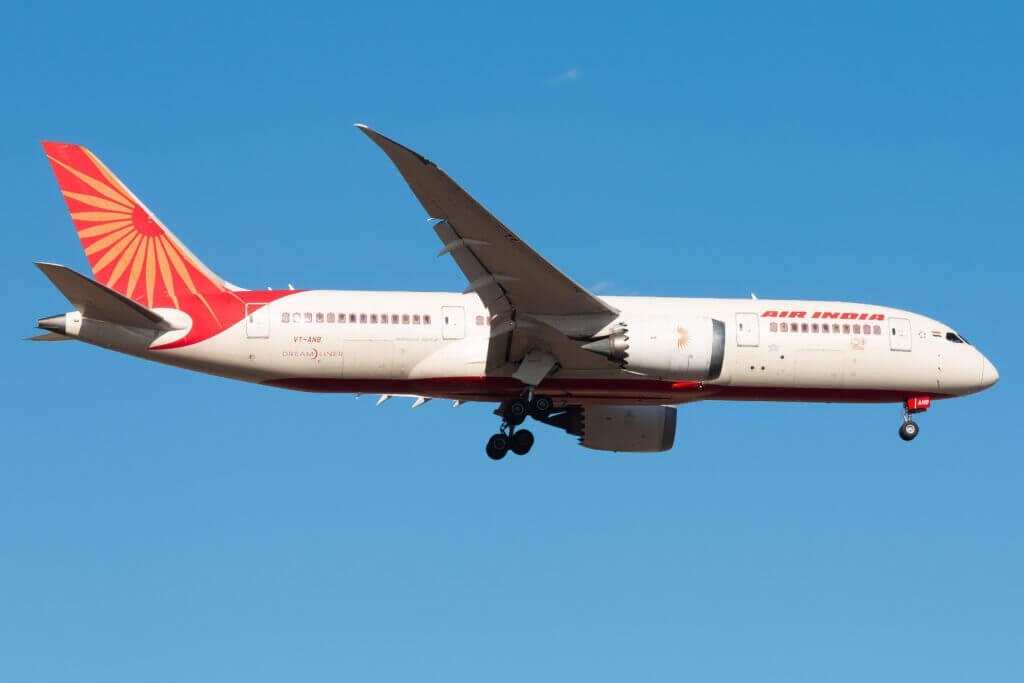
Air India Boeing 787-8 Dreamliner (type involved in Flight 171).
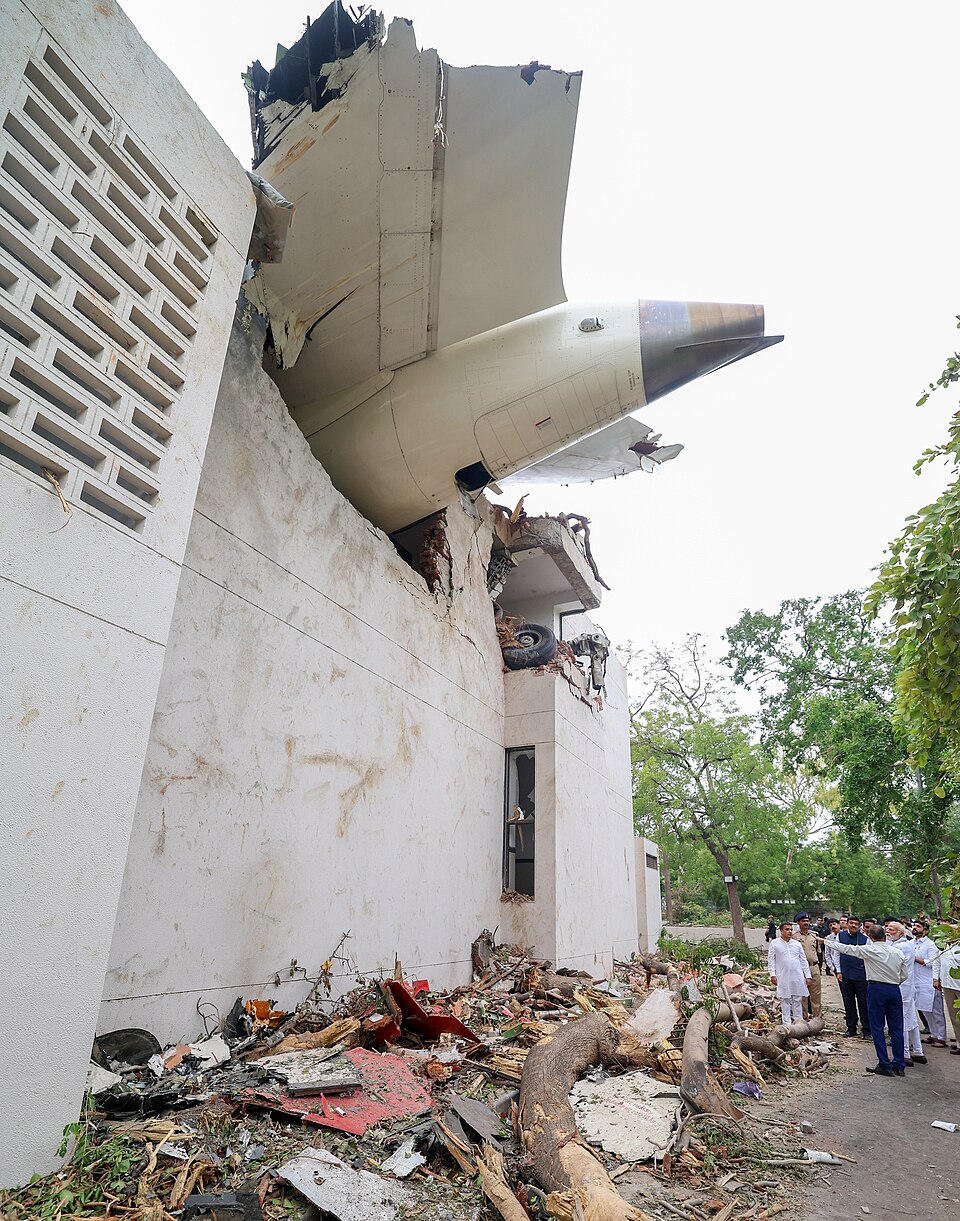
Wreckage of Air India Flight 171 at the B.J. Medical College site, Ahmedabad, June 2025.
Frequently Asked Questions
Q1. What is the deadliest plane crash in history?
The 1977 Tenerife airport disaster, in which two Boeing 747s collided on a fog-covered runway, killed 583 people still the highest death toll of any aviation accident.
Q2. What is the deadliest single-aircraft crash?
Japan Airlines Flight 123 in 1985, with 520 deaths and four survivors.
Q3. What is the deadliest air disaster in Pakistan?
Airblue Flight 202, which crashed into the Margalla Hills near Islamabad on 28 July 2010, killing all 152 aboard.
Q4. What caused the Air India 171 crash?
Still under investigation. Preliminary report showed both fuel switches moved to CUTOFF shortly after take-off; final report not yet published (as of Nov 2026).
Q5. Is flying safe?
Yes. IATA reports one fatal accident per approximately 5.6 million flights (2021–2025 average).
Q6. Is the black box really black?
No ,flight recorders are bright orange so they can be found in wreckage.
Q7. What is Crew Resource Management (CRM)?
A training philosophy born largely from Tenerife that emphasises clear communication, assertiveness and shared decision-making in the cockpit.
Q8. Why do investigators recover the black boxes?
The cockpit voice recorder and flight data recorder together explain what the pilots said and what the aircraft systems were doing in the final moments.