Wings That Wore Out: Why Old Airplane Models Failed
The complete timeline of aging aircraft failures — metal fatigue, corrosion, design flaws, multiple-site damage and the commercial reasons classic jetliners disappeared.
Are old airplanes safe to fly? An aging aircraft is not automatically dangerous. The Australian Transport Safety Bureau (ATSB) found that with adequate maintenance the consequences of ageing can be managed. Yet a handful of famous failures — the de Havilland Comet crash, Lockheed Electra flutter, Aloha Airlines 243, TWA 800 wiring, and Japan Airlines 123 — taught the world that metal fatigue, aircraft corrosion, flight cycles and bad repairs can still bring an airframe down.
This concise article covers the failure of old airplane models, the evolution of damage-tolerance design, continuing airworthiness rules, and why classic jetliners such as the Boeing 727, DC-10, Concorde and early 747s left passenger service. Every major claim is sourced.
What Makes an Aircraft “Old”? Calendar Age vs Flight Cycles
Aircraft age is measured in three clocks: chronological years, flight hours and flight cycles (one take-off and landing). Fatigue damage accumulates mainly from pressurisation cycles. Short-haul aircraft can therefore age faster than long-haul aircraft with the same calendar age.
Ageing clock | What it measures | What it damages |
Calendar age | Years since manufacture | Corrosion, wiring insulation |
Flight hours | Time in the air | Fatigue in wings & engines |
Flight cycles | Take-offs & landings | Fuselage skin, joints, bulkheads |
FUN FACT: Bend a paper clip once and nothing happens. Bend it back and forth repeatedly and it snaps — that is metal fatigue in airplanes, explained by the ATSB.
Source: ATSB “How Old Is Too Old?” ageing-aircraft report.
How Engineering Philosophy Evolved
When | Philosophy | Core idea |
1940s | Safe-life | Replace parts before a fixed lifespan expires |
1950s | Fail-safe | Backup structures carry load if one part fails |
1970s | Damage tolerance | Assume cracks exist; inspect before they become critical |
After 1988 | Aging programmes | Triggered by Aloha 243: fatigue, corrosion, wiring research |
Sources: ATSB | Flight Safety Foundation — crackdown on fatigue.
Landmark Failures of Old Airplane Models
1954 | de Havilland Comet — The First Jetliner Metal-Fatigue Disaster
The world’s first commercial jetliner, the Comet 1, suffered two mid-air break-ups within three months. Investigators recovered wreckage and pressure-tested a complete fuselage in a giant water tank at Farnborough. Fatigue cracks started at the sharp corners of the square windows and grew with every pressurisation cycle until the structure failed.
Legacy: Rounded windows, full-scale fatigue testing and the birth of modern damage-tolerance thinking.
FUN FACT: The Comet was not an old airplane. It failed because the science of metal fatigue in pressurised fuselages did not yet exist.

1959–60 | Lockheed Electra — Whirl-Mode Flutter
Two brand-new L-188 Electras lost their wings in flight. The cause was propeller “whirl-mode” flutter: a weakened engine mount allowed gyroscopic forces to resonate with the wing until it tore off. One of the aircraft had only 132 flight hours.
Legacy: Redesigned nacelles and mounts; every Electra in service was modified.
FUN FACT: This was pure design physics, not ageing. The aircraft were almost new when they failed.
Sources: FAA Lessons Learned | Aviation Safety Network.
1974 | Turkish Airlines 981 — Cargo-Door Design Flaw
A rear cargo door on a DC-10 burst open after take-off from Paris. The cabin floor collapsed and severed the control cables. 346 people died. A similar door failure two years earlier had ended in a safe landing, so the weakness was already known.
Legacy: Mandatory redesign of the DC-10 cargo-door latching system.
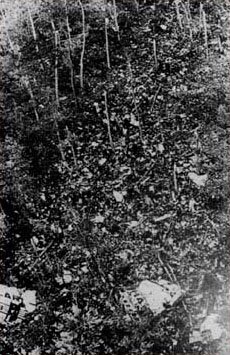
1985 | Japan Airlines 123 — Faulty Repair That Waited Seven Years
An improper repair to the aft pressure bulkhead after a 1978 tail strike finally failed. The bulkhead ruptured, the tail and hydraulics were lost, and the crew kept the 747 flying for roughly 30 minutes before it hit a mountain. 520 people died — still the deadliest single-aircraft accident.
Legacy: Global scrutiny of structural repair quality and maintenance records.
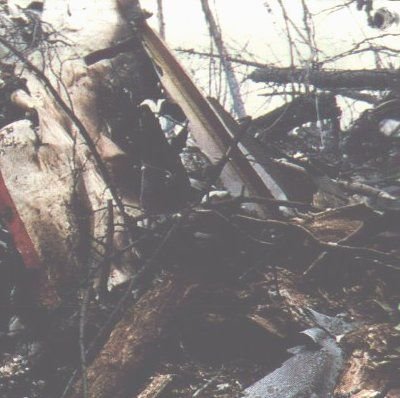
1988 | Aloha Airlines 243 — Multiple-Site Damage on a High-Cycle 737
A 19-year-old Boeing 737-200 with 89,680 flight cycles lost an 18-foot section of upper fuselage at 24,000 ft over Hawaii. Salt-laden short sectors had created hundreds of tiny cracks along a lap joint that linked up at once. The crew still landed the aircraft at Maui.
Legacy: FAA National Aging Aircraft Research Program, Aging Aircraft Safety Act of 1991, and the term “multiple-site damage” (widespread fatigue damage).
FUN FACT: Short flights age a pressurised aircraft faster than long flights — every take-off and landing is a full pressurisation cycle.

Aloha Airlines Flight 243 (N73711) after landing at Kahului, Maui — upper fuselage torn open.
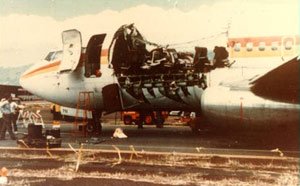
Close view of the torn fuselage of N73711 after the Aloha 243 incident.
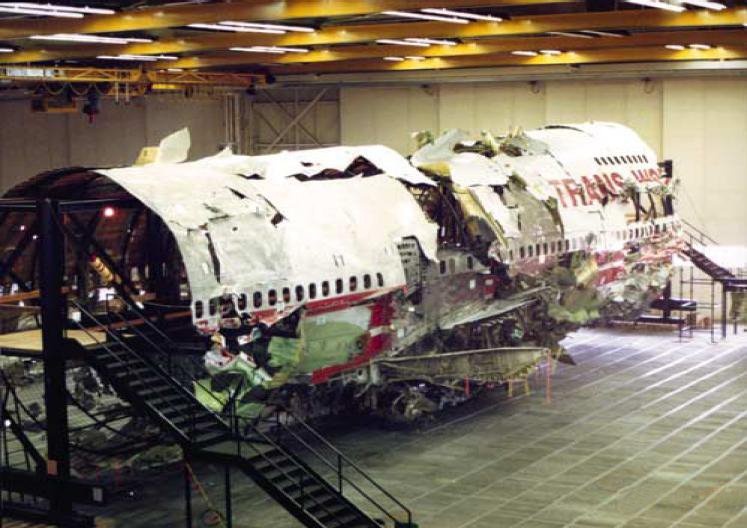
1996 | TWA 800 — Ageing Wiring and Centre Fuel-Tank Explosion
A 25-year-old Boeing 747-100 exploded shortly after leaving New York. The NTSB concluded that the centre wing tank’s fuel-air mixture ignited; a short circuit in ageing wiring was the most likely source. The investigation put invisible wiring condition and fuel-tank ignition risks on the industry agenda.
Legacy: Fuel-tank inerting systems, stricter wiring inspections and continuing airworthiness focus on hidden ageing.
Commercial Obsolescence — When Models Simply Disappear
Not every failure of old airplane models is a crash. Many classic jetliners left passenger service for economic and regulatory reasons:
- Boeing 727 and other three-engine jets — once ETOPS rules made reliable twins practical, three engines became an expensive liability.
- McDonnell Douglas DC-10 and Lockheed L-1011 TriStar — advanced for their day but eventually out-competed on fuel burn and maintenance cost.
- Concorde — an engineering triumph limited by fuel consumption, sonic-boom restrictions, tiny passenger capacity and a premium-only market.
- Airbus A380 — designed for hub-to-hub traffic that airlines increasingly replaced with flexible long-range twins.
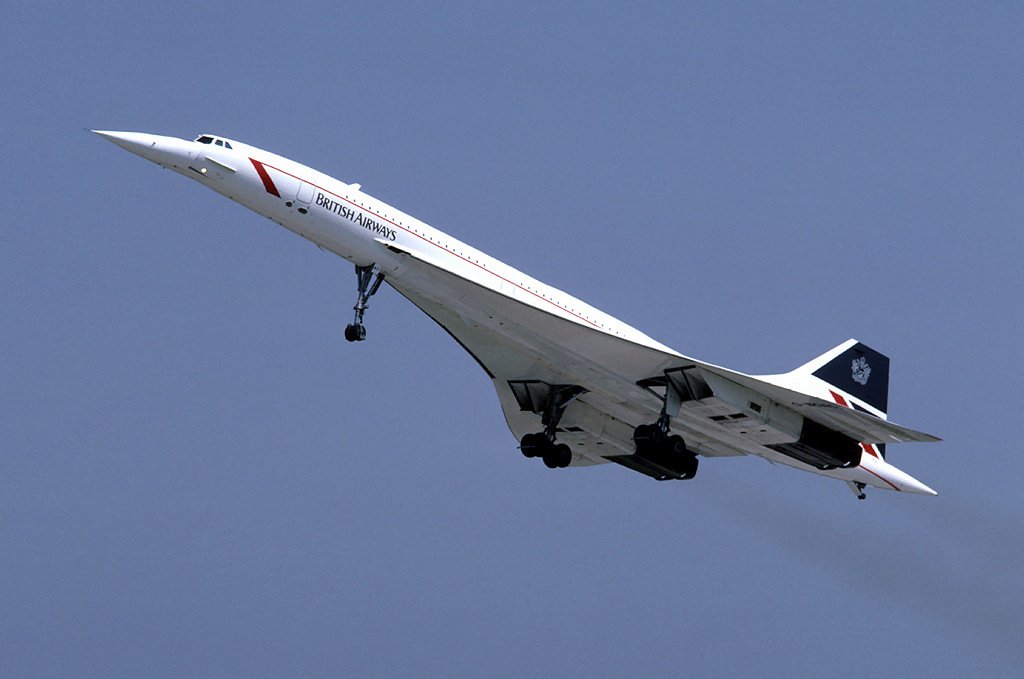
FUN FACT: Concorde could cross the Atlantic in under 3.5 hours, yet its operating costs were so high that only two airlines ever flew it in scheduled service.
Myth vs Reality About Aging Aircraft
Myth | Reality |
Old plane = unsafe plane | With proper maintenance and inspections, ageing effects can be managed (ATSB). |
Age means years only | Flight cycles and hours matter more. Aloha 243 was 19 years old but had nearly 90,000 cycles. |
Short flights are gentle | Short sectors mean more pressurisation cycles and faster fatigue. |
New design = proven design | The Comet and Electra were cutting-edge when they failed. |
Why Airlines Keep Flying Old Aircraft
Aircraft are usually designed around a 20-year economic life. When the cost of continued maintenance is still lower than the cost of replacement, operators — especially smaller regional airlines — keep the airframes flying. Large carriers tend to renew fleets earlier for efficiency and brand reasons.
Source: ATSB ageing-aircraft report.
Frequently Asked Questions
Q1. Are old airplanes unsafe to fly?
Not automatically. Ageing is a real safety issue, but modern continuing-airworthiness rules, damage-tolerance design and Limit-of-Validity (LOV) cycle limits keep them safe when properly maintained.
Q2. How old is too old for a passenger jet?
There is no single number. What matters is accumulated flight cycles, flight hours, corrosion environment and the quality of the maintenance programme.
Q3. What is metal fatigue in airplanes?
Repeated loading causes microscopic cracks to form and grow until a part fails at loads far below its original strength.
Q4. What is a flight cycle and why does it matter?
One take-off and landing. Each cycle fully pressurises and depressurises the fuselage, so short-haul aircraft can accumulate structural fatigue faster than long-haul aircraft.
Q5. What caused the Aloha Airlines 243 accident?
Multiple-site fatigue and corrosion in the fuselage lap joints of a high-cycle 19-year-old Boeing 737-200, missed by the airline’s maintenance programme.
Q6. Why did the de Havilland Comet crash?
Fatigue cracks grew from the corners of its square cabin windows under repeated pressurisation.
Q7. Why were three-engine jets like the 727 and DC-10 retired?
Modern twin-engine aircraft became more fuel-efficient and reliable under ETOPS rules, making the third engine an economic burden.
Q8. Why was Concorde retired?
High fuel burn, limited routes, expensive maintenance and a very small premium passenger market made continued operation uneconomic.