Evolution of Trains in India: From Steam Engines to Vande Bharat
The evolution of trains in India is a remarkable journey spanning nearly two centuries of innovation, industrial development and national transformation. From early colonial-era railway tracks to modern electric trains and Vande Bharat Express services, Indian railways have transformed how millions of people travel.
India’s first celebrated passenger train departed from Bombay (now Mumbai) for Thane on 16 April 1853. However, the country’s railway history began even earlier, with industrial railways used to transport construction materials.
Today, Indian Railways connects cities, towns, agricultural regions and industrial centers through one of the world’s largest railway networks.
In this article, explore the complete history of Indian trains, major railway milestones, changes in locomotive technology, and the future of high-speed rail in India.
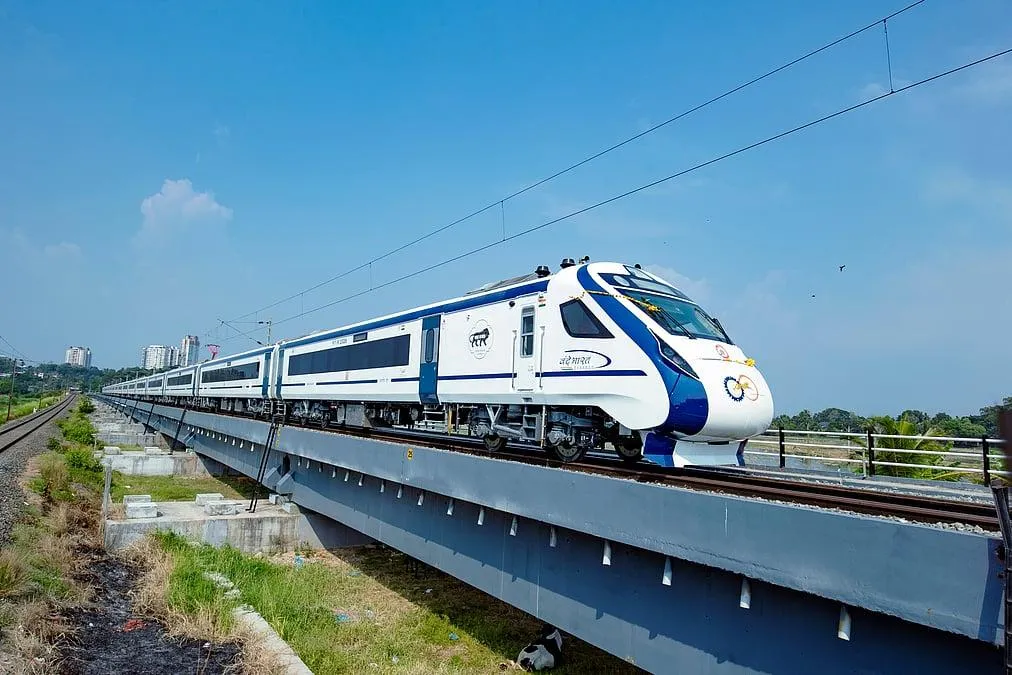
Evolution of Trains in India: Timeline at a Glance
Red Hill Railway, Madras
First Bombay–Thane passenger train
First electric passenger train
Kolkata Metro begins operation
Vande Bharat Express introduced
Mumbai–Ahmedabad High-Speed Rail
Red Hill Railway, Madras
Early industrial railway transportation
First Bombay–Thane passenger train
Beginning of public passenger railways in India
Darjeeling Himalayan Railway
Landmark mountain railway
Steam locomotive built at Ajmer Workshop
Important milestone in domestic manufacturing
First electric passenger train
Beginning of electric passenger rail in India
Reorganization of major railway systems
Foundation of the modern unified Indian Railways
Rajdhani Express introduced
Premium long-distance passenger travel
Kolkata Metro begins operation
First metro railway in India
Shatabdi Express introduced
Modern premium daytime intercity services
Konkan Railway becomes fully operational
Major coastal railway engineering achievement
Vande Bharat Express introduced
Modern domestically developed trainsets
Vande Bharat network expansion
Continued modernization of passenger services
Mumbai–Ahmedabad High-Speed Rail
India’s first dedicated high-speed rail corridor under construction
1832–1852: The Early Beginnings of Railways in India
The history of railways in India began before the country’s famous first passenger service.
In 1832, proposals emerged for developing railway transportation around Madras, now Chennai. The growing need to move construction materials and industrial goods encouraged interest in rail-based systems.
1837: The Red Hill Railway
The Red Hill Railway near Madras is widely recognized as an early operational railway in India.
Associated with engineer Arthur Cotton, the railway helped transport granite for road construction.
Unlike modern passenger trains, this railway was designed primarily for industrial transportation. It demonstrated the value of guided tracks for moving heavy materials.
The methods of traction used during the railway’s early operation are described differently in historical accounts, so it should not be presented as a conventional steam passenger railway.
As British commercial interests expanded, railway companies began planning larger networks connecting important ports, towns and commercial centers.
These developments laid the foundation for India’s first major public passenger railway.
1853: The First Passenger Train in India
A historic moment occurred on 16 April 1853, when India’s first widely recognized public passenger train traveled from Bori Bunder in Bombay to Thane.
The train covered approximately 34 kilometers and carried around 400 invited passengers in 14 carriages.
Three steam locomotives, traditionally identified as Sahib, Sindh and Sultan, were associated with the inaugural journey.
The departure was celebrated with a 21-gun salute.
Operated by the Great Indian Peninsula Railway, the service represented a major turning point in India’s transportation history.
For the first time, steam-powered passenger railway transportation demonstrated its potential on a major public route in India.
Why was the 1853 journey important?
Before the expansion of railways, long-distance journeys depended heavily on roads, waterways and animal-powered transport.
Railways created new opportunities to move larger numbers of passengers and substantial quantities of goods between important locations.
The Bombay–Thane journey helped initiate a period of railway construction that would reshape the subcontinent.
Historical fact: India’s railway history began before 1853, but 16 April 1853 remains the most famous milestone in the beginning of Indian passenger railway services.
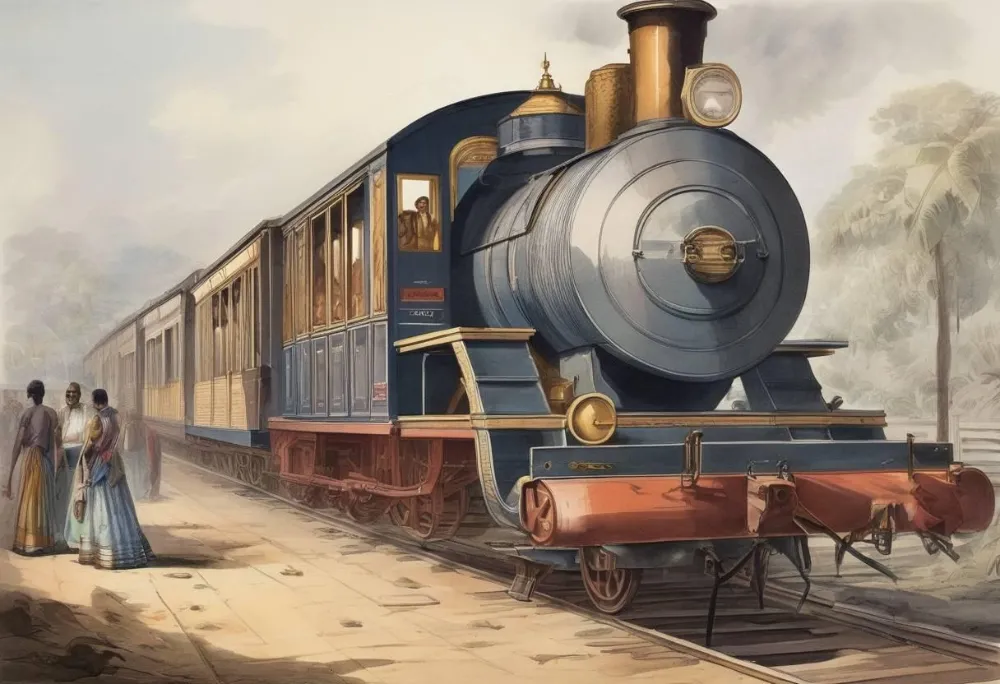
1853–1947: Railway Expansion During British Rule
Following the successful Bombay–Thane service, railway development accelerated.
New lines connected major commercial and administrative centers, including Bombay, Calcutta, Madras and Delhi.
The East Indian Railway and Great Indian Peninsula Railway played important roles in expanding the network.
Railways served colonial economic and military interests, including the transportation of raw materials, manufactured goods, administrative personnel and troops.
At the same time, the expanding infrastructure created new connections between regions and transformed opportunities for passenger movement.
Mountain Railways and Engineering Challenges
Building railways across India’s varied geography required considerable engineering innovation.
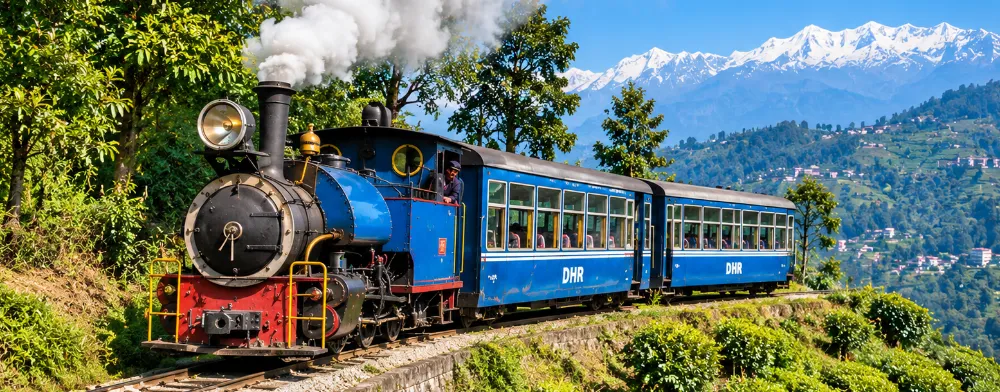
The Darjeeling Himalayan Railway, opened in 1881, became an important example of railway construction in difficult mountain terrain.
Other routes required tunnels, bridges, steep gradients and specialized railway technologies.
1895: Indian Locomotive Manufacturing
In 1895, the Ajmer Workshop produced a steam locomotive regarded as the first built in India.
This achievement demonstrated the development of railway manufacturing skills within the subcontinent.
Railway workshops gradually became important centers for engineering, maintenance and technical expertise.
The Impact of Partition in 1947
By the time India gained independence, the railway network had become one of the largest in Asia.
Partition divided railway infrastructure, rolling stock and operating systems between India and the newly created Pakistan.
The newly independent countries faced significant challenges in reorganizing railway operations and transport connections.
1925: The Beginning of Electric Railways in India
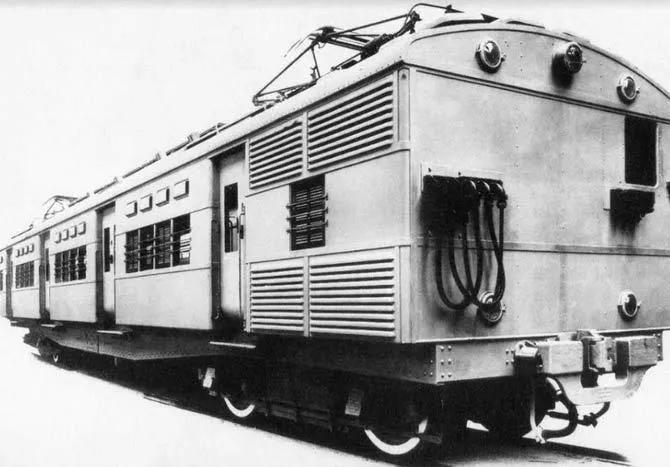
One of India’s most important technological railway milestones occurred on 3 February 1925.
The country’s first electric passenger train operated between Bombay Victoria Terminus and Kurla Harbour.
The service used a 1,500-volt DC overhead electrical system.
Unlike steam locomotives, electric trains draw power from external electrical infrastructure, allowing efficient operation without burning coal onboard.
Electric traction became especially valuable for suburban passenger transportation and busy urban railway corridors.
Over time, India expanded railway electrification using more modern power systems.
Today, electric locomotives and trainsets form a major part of the country’s railway modernization efforts.
1951–2000: Indian Railways After Independence
After independence, the government reorganized the railway systems inherited from the colonial era.
By the early 1950s, the major railway networks were brought together into a more unified national railway structure.
This period laid the foundation for modern Indian Railways.
Diesel Locomotives Replace Steam
During the second half of the 20th century, diesel locomotives increasingly replaced steam engines.
Diesel traction generally reduced the need for extensive steam locomotive servicing, coal handling and water facilities.
Electric locomotives also became increasingly important as electrification expanded.
Steam technology gradually disappeared from regular mainline operations, although selected heritage railways continued to preserve historic locomotives.
1969: Rajdhani Express
The Rajdhani Express was introduced in 1969, connecting New Delhi and Howrah.
It represented an important development in premium long-distance passenger travel, offering air-conditioned accommodation and priority services.
1984: India's First Metro
Kolkata Metro began operations in October 1984.
It became India’s first metro railway system and introduced a new era of rapid urban rail transportation.
Over subsequent decades, metro systems expanded into other major Indian cities.
1988: Shatabdi Express
The Shatabdi Express was introduced in 1988 as a premium daytime intercity service.
Its development reflected increasing demand for faster and more comfortable travel between important cities.
1998: Konkan Railway
The Konkan Railway became fully operational in 1998.
Running through challenging coastal and mountainous terrain, the railway involved extensive bridge and tunnel construction.
It significantly improved rail connectivity along India’s western coastline.
2000–2018: Digitalization and Modern Railway Development
The 21st century brought significant improvements in railway technology, ticketing, infrastructure and passenger services.
Computerized booking systems and IRCTC’s online reservation services made railway tickets more accessible.
Indian Railways also invested in upgraded tracks, passenger coaches, signaling systems and more powerful locomotives.
Urban metro systems expanded, while new railway projects improved connectivity between previously underserved regions.
Dedicated Freight Corridors
Another important development was the construction of dedicated freight railway corridors.
These routes are intended to improve freight capacity and efficiency while reducing pressure on heavily used conventional railway lines.
Such projects reflect the growing importance of reliable logistics infrastructure to India’s economy.
2019: The Introduction of Vande Bharat Express
A new chapter in Indian railway transportation began in February 2019 with the introduction of Vande Bharat Express.
Originally developed as Train 18, Vande Bharat represented a major step toward domestically designed modern passenger trainsets.
Unlike conventional locomotive-hauled trains, Vande Bharat uses a distributed electric traction system.
This allows improved acceleration and supports modern passenger operations.
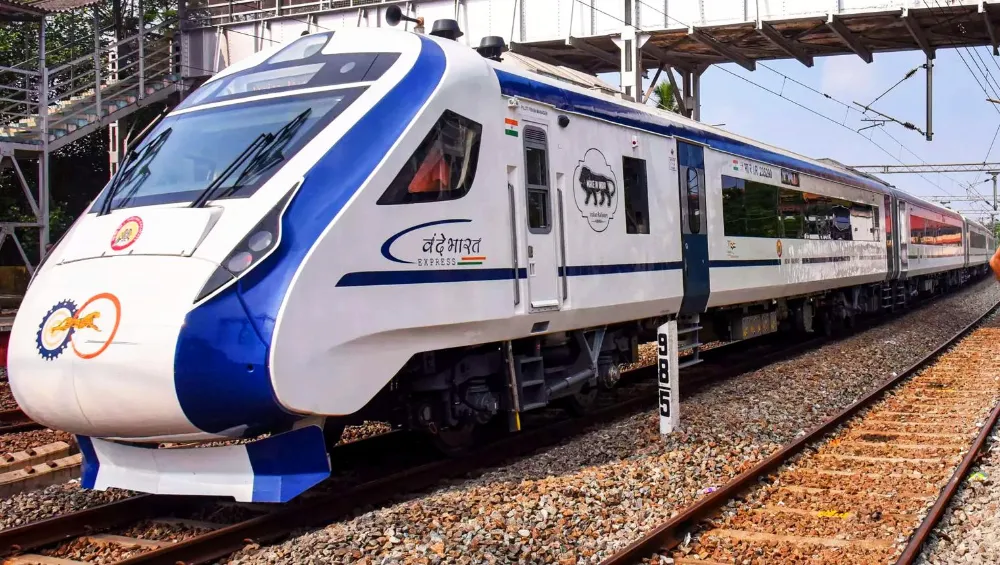
What makes Vande Bharat different?
Its notable features include:
Aerodynamic, streamlined trainset design.
Modern electric propulsion and regenerative braking.
Improved passenger seating and climate control.
Automatic passenger doors.
Modern onboard information and passenger facilities.
Improved acceleration compared with many conventional locomotive-hauled services.
Vande Bharat trains are often described as semi-high-speed trains. Their permitted operating speeds depend on the infrastructure and route.
They should not be confused with the dedicated high-speed Shinkansen-style trains planned for the Mumbai–Ahmedabad corridor.
2020–2026: Expanding Modern Railway Services
During the 2020s, Indian Railways continued expanding and modernizing its passenger and freight infrastructure.
Vande Bharat services spread to additional routes, while improvements in railway electrification and manufacturing continued.
According to Indian government reporting for the 2025–26 financial year, approximately 7.41 billion passenger journeys were recorded across Indian Railways.
Official reporting also indicated that approximately 99.6% of the broad-gauge network had been electrified by 2026.
These figures illustrate the enormous scale of India’s railway system and its ongoing transition toward electric traction.
The Vande Bharat network also expanded to serve more passengers, with the Vande Bharat Sleeper service introduced in January 2026.
However, railway modernization remains an ongoing process. Track capacity, passenger crowding, infrastructure maintenance and service speed continue to present challenges.
India's First Bullet Train: Mumbai–Ahmedabad High-Speed Rail
India’s planned high-speed rail network represents another important stage in the evolution of train transportation.
The Mumbai–Ahmedabad High-Speed Rail project is being developed with Japanese technical and financial cooperation.
The approximately 508-kilometer corridor is designed to provide dedicated high-speed passenger transportation between Mumbai and Ahmedabad.
Unlike conventional Indian railway services, the project involves specialized high-speed infrastructure, advanced train-control technology and purpose-built stations.
Construction remained underway during 2026.
The project is expected to introduce a new standard of high-speed rail transportation in India, although commercial opening dates depend on construction progress, testing and regulatory approval.
Other proposed high-speed corridors reflect long-term ambitions to connect major economic and population centers through faster railway services.
How Have Trains in India Changed Over Time?
Power
Coal-fired steam engines
Primarily electric, with diesel still used
Train design
Locomotive and conventional carriages
Modern coaches and electric trainsets
Passenger comfort
Basic facilities in many early services
Air conditioning and improved facilities on many modern services
Booking
Station-based ticketing
Online booking and digital services
Safety
Early mechanical systems
Advanced signaling and modern safety technology
Infrastructure
Expanding colonial network
Manufacturing
Early imports and local workshops
Extensive domestic locomotive and train manufacturing
For a worldwide comparison of steam, diesel, electric and high-speed trains, read Evolution of Trains Over Time.
Why Indian Railways Matters to the Country
Indian Railways has played a major role in shaping the country’s economic and social development.
Railways connect agricultural regions with urban markets, transport industrial products and support domestic trade.
They also provide affordable long-distance transportation and connect millions of people to educational, employment and family opportunities.
Railway infrastructure has influenced the development of towns, industrial centers and transport hubs across India.
However, the history of Indian railways is not only a story of progress.
Colonial-era railway construction was closely tied to imperial commercial and military priorities. The railway network later became an important national asset, but its history also reflects unequal access, economic pressures and the challenges of operating transport infrastructure across a vast and diverse country.
Today, railway modernization aims to improve capacity, passenger safety, efficiency and environmental performance.
Frequently Asked Questions About the Evolution of Trains in India
When did trains first start in India?
Industrial rail transport existed in India by 1837, but the first widely recognized public passenger train operated between Bombay and Thane on 16 April 1853.
What was the first railway in India?
The Red Hill Railway near Madras, which began operating in 1837, is generally recognized as an early operational industrial railway in India.
What was the route of India's first passenger train?
The first celebrated passenger train traveled approximately 34 kilometers from Bori Bunder in Bombay to Thane.
When was the first electric train introduced in India?
India’s first electric passenger train operated between Bombay Victoria Terminus and Kurla Harbour on 3 February 1925.
When did Vande Bharat Express start?
Vande Bharat Express was introduced in February 2019, initially operating between New Delhi and Varanasi.
Is Vande Bharat a bullet train?
No. Vande Bharat is a modern Indian electric trainset, while a true high-speed rail system generally uses specialized infrastructure designed for much higher operating speeds.
Does India have a bullet train?
As of November 2026, the Mumbai–Ahmedabad High-Speed Rail corridor was under construction and had not yet begun commercial passenger operation.
Explore More Train History
Continue exploring railway transportation through these related pages:
Discover the global history, technology and evolution of railway transportation.
Explore the major milestones that transformed railway transportation worldwide.
Compare early steam trains with diesel, electric and modern high-speed trains.
Learn about train history through simple explanations, pictures and educational facts.
Sources and Further Reading
Dates and figures on this page were checked against government reports and established railway-history sources, including:
- Press Information Bureau, Government of India: From Steam to Speed – The Ever-Evolving Journey of Railways (April 2026, PDF)
- Indian Railways Fan Club (IRFCA): India's First Railways – the Red Hill Railroad
- IRFCA: A Brief History of Railway Electrification in India
- News On AIR: First Vande Bharat Sleeper train flagged off (January 2026)
- Press Information Bureau: Mumbai–Ahmedabad High-Speed Rail (June 2026, PDF)